

- MEDITERRANEAN YACHTING MAGAZINE
Back to previous page Language Italian Spanish
Ferrari Hypersail takes Maranello electronics into the ocean
With its hull completed, Ferrari Hypersail reveals the electronic system coordinating foils, keel and rudder in flight
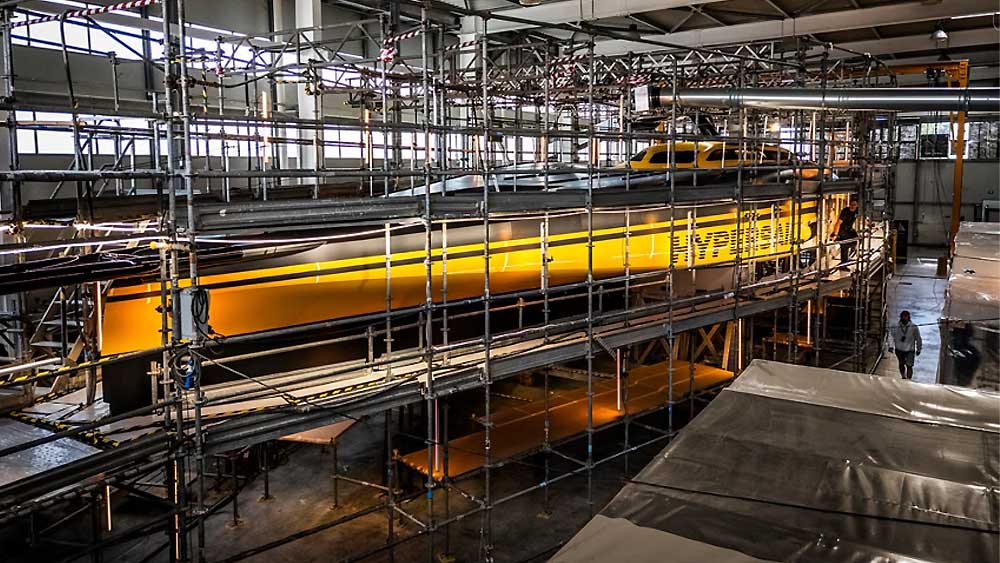
Ferrari Hypersail brings Flight Control, active foils, carbon structures and more than 20 patents into ocean sailing
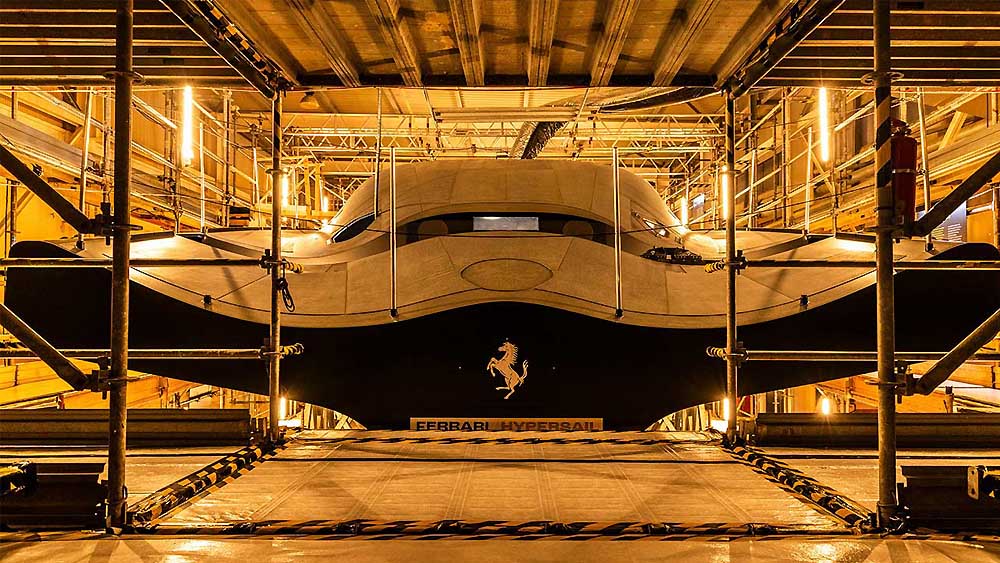
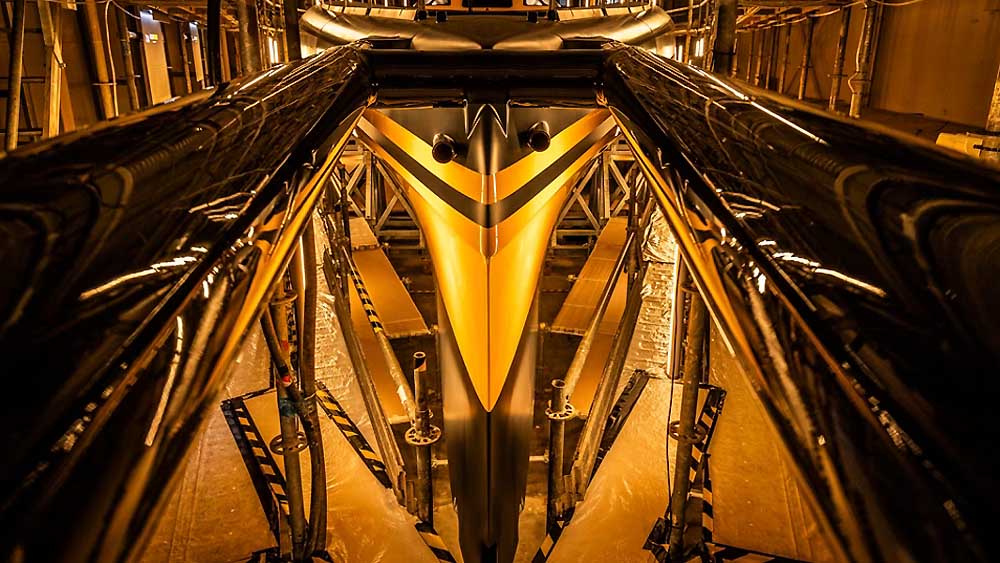
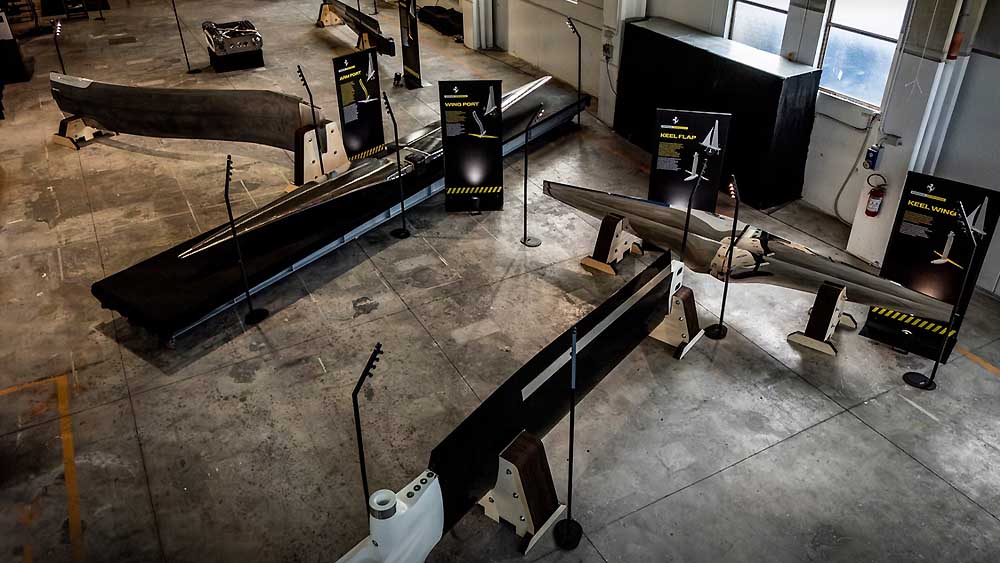
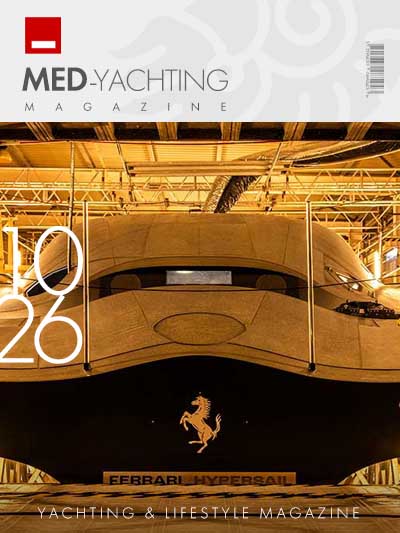
Ferrari Hypersail has entered the final stages of construction, with painting and livery work on the hull completed and the appendages now at the yard. Yet the most interesting development goes beyond construction progress. The 100-foot flying monohull is becoming a platform where foils, keel and rudder continuously interact with an electronic control system derived from Ferrari’s automotive expertise.
Flight Control brings electronics on board
At the centre of this technological phase is Flight Control, the system designed to manage the yacht’s attitude automatically while sailing in flying mode.
A network of sensors continuously monitors sea conditions and hull movements. The information is processed by the onboard computer, which calculates the necessary corrections and sends commands to the actuators controlling the appendages.
The principle has a direct parallel with high-performance cars: monitor the dynamic behaviour of the vehicle, process information rapidly and make continuous adjustments to maintain the required attitude.
Three elements controlling flight above the water
The hydrodynamic architecture revolves around the foils, keel and rudder, each performing a specific role in generating and managing lift.
The lateral foils help raise the hull above the surface, reducing hydrodynamic resistance. The keel itself incorporates a foil equipped with a movable flap, providing an additional contact point and contributing to attitude control.
The rudder also performs more than its conventional steering role. A movable surface allows continuous micro-adjustments, integrating the rudder into the yacht’s wider dynamic control system.
Carbon and titanium where loads increase
For a yacht designed to cross oceans while flying above the water, lightness and structural stiffness are closely connected requirements. The hull uses multiple layers of carbon fibre to limit deformation under load and enable the appendages to respond accurately to control inputs.
In areas exposed to particularly high loads, including the foil arms and mainsail traveller, the project uses sandwich structures combining carbon and titanium.
This is one of the clearest examples of knowledge moving between two apparently different sectors. Materials, structural calculation and load management developed for sports cars are being reinterpreted for an ocean-going sailing platform.
More than 20 patents around a single platform
Development work on Ferrari Hypersail has resulted in more than 20 patents, according to information released about the project. Technologies already presented include Winch by Wire, extended-range wind turbines and the MV/HV system developed to integrate renewable energy sources.
Other solutions include a rotating mast fitted with small aerodynamic surfaces and a double-skin mainsail intended to improve control and efficiency of the sail plan.
Energy management forms an integral part of the project. Ferrari conceived Hypersail to generate the energy required for its onboard systems autonomously from renewable sources, without relying on a combustion engine.
From the racetrack to the sea, and back again
From the outset, Ferrari has described Hypersail as a research platform as well as a sporting challenge. One of its most significant aspects is that technology transfer is intended to work in both directions.
Simulation, aerodynamics, control software and energy management come from automotive experience, while data collected during ocean sailing may in turn contribute to new calculation models and research methods for Ferrari.
With the hull completed and the appendages now at the yard, Hypersail is approaching the stage when solutions developed through simulation will face an environment considerably less predictable than a racetrack: the open ocean.
© MED Yachting Editorial Team
Ferrari Hypersail takes Maranello electronics into the ocean
__
The information in this article has been sourced from and adapted from official sources and/or press releases, in accordance with our editorial code of ethics.


subscribe free of charge to our WhatsApp channel : scan or click the QR code



MAGAZINE
YACHTS
LIFESTYLE
EVENTS
Partnership
Disclaimer and publishing
Privacy and Cookies (GDPR)
media@med-yachting.com

Euroblu International
MED digital publishing
Via Giosué Carducci, 10
00187 Roma IT
PI 14592991005
GoogleMap
© 2019, MED-YACHTING & LIFESTYLE MAGAZINE All rights reserved.