

- MEDITERRANEAN YACHTING MAGAZINE
Back to previous page Language Italian Spanish
Azimut Fly 70, a 21-metre flybridge combining space and technology
The new Azimut Fly 70 combines Alberto Mancini exteriors, Fabio Fantolino interiors and Volvo Penta IPS power for 31 knots
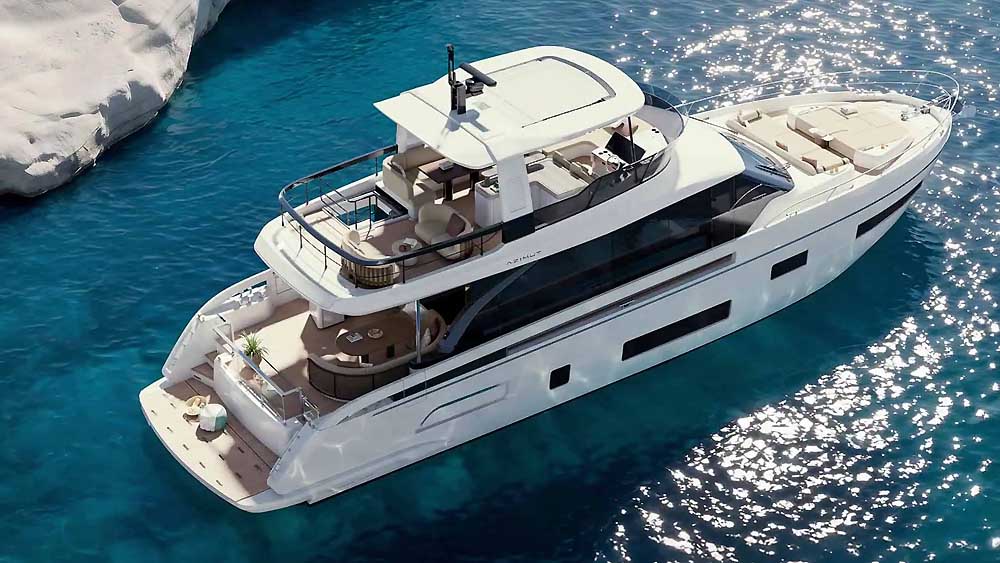
Azimut Fly 70 combines a 21.47-metre platform, four cabins, two cockpit layouts and new solutions for quieter life on board
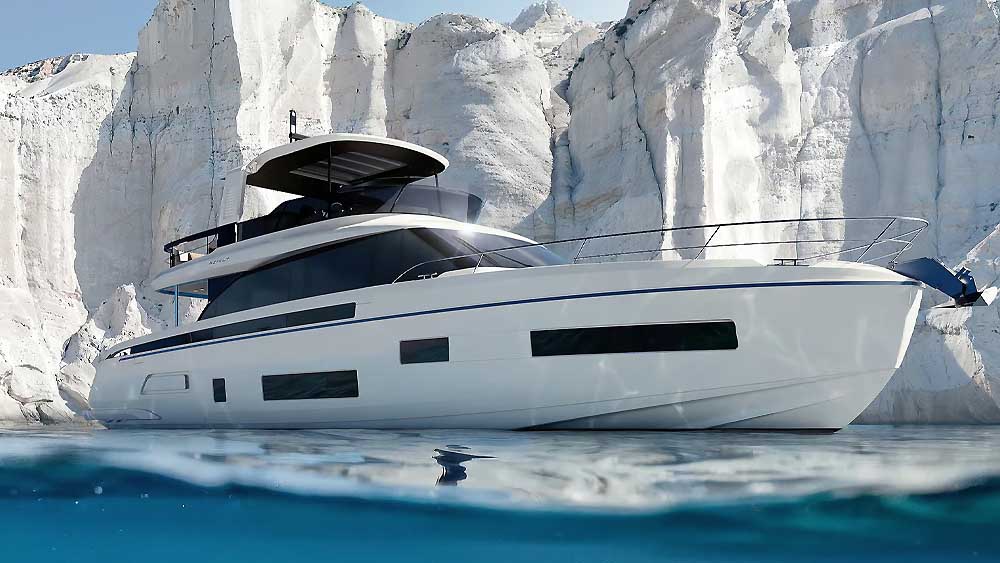
With the new Fly 70, Azimut Yachts is updating one of the most established segments in its range. Presented in world premiere at the 2026 Cannes Yachting Festival, the 21.47-metre model combines exterior design by Alberto Mancini with interiors by Fabio Fantolino, focusing on open-air living, family use and a closer relationship with the sea.
A new 21.47-metre Fly
The Fly 70 measures 21.47 metres overall, with a maximum beam of 5.46 metres and a full-load draught of 1.56 metres. Declared full-load displacement is 44.85 tonnes.
Construction combines GRP and carbon fibre. The hull was developed by P.L. Ausonio Naval Architecture together with the Azimut R&D Department and uses a planing geometry with 16 degrees of deadrise aft and 17 degrees amidships.
Accommodation includes four guest cabins for eight people, plus a crew cabin with two berths.
Two approaches to the cockpit
One of the defining elements of the Fly 70 is its extended cockpit, available in two different configurations.
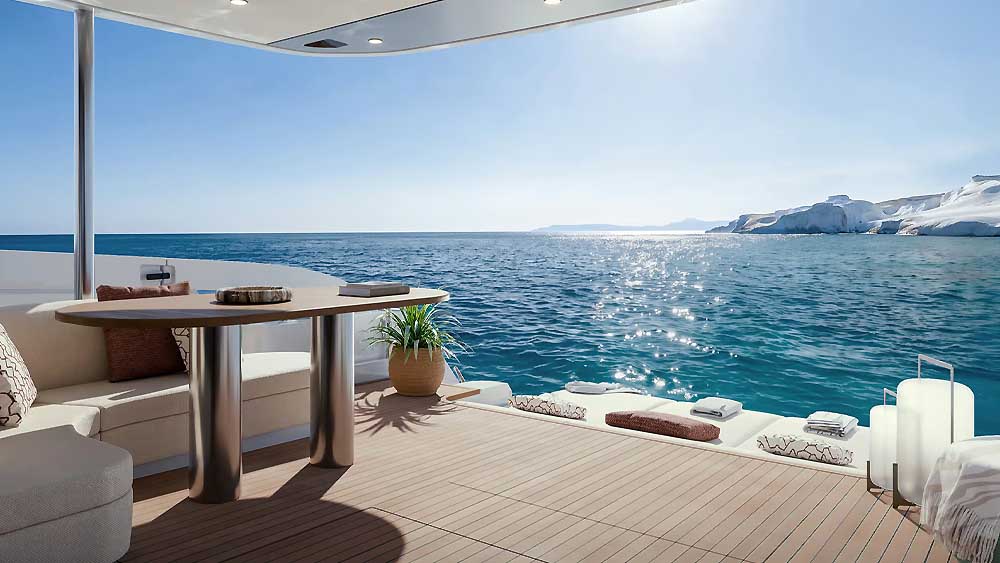
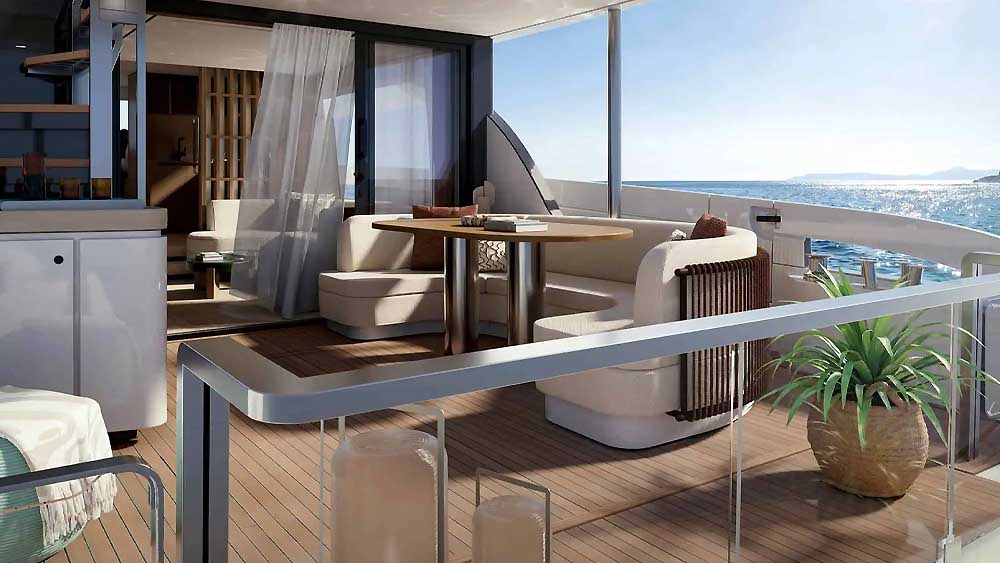
The Terrace Cockpit, presented in Cannes, is centred around an outdoor dining table for eight people facing aft. A transparent parapet maintains an uninterrupted view of the sea, while storage beneath the deck provides space for water toys.
The Beach Cockpit changes the relationship with the water. A synchronised system opens the transom and lowers the seating, turning the aft section into a sunbathing platform positioned close to sea level.
Three functional areas on the flybridge
Azimut divides the upper deck into three main areas. Forward, the helm is positioned beside a sunpad. A C-shaped dinette and serviced bar occupy the central section, while the aft terrace is free of fixed structural elements and can be furnished with freestanding pieces.
The space is shaded by a GRP hard top with vertical supports and a roof flowing around the rollbar towards the bow.
This arrangement allows the flybridge to operate both as a navigation area and as a substantial outdoor living space without concentrating every function around the helm.
Interiors by Fabio Fantolino
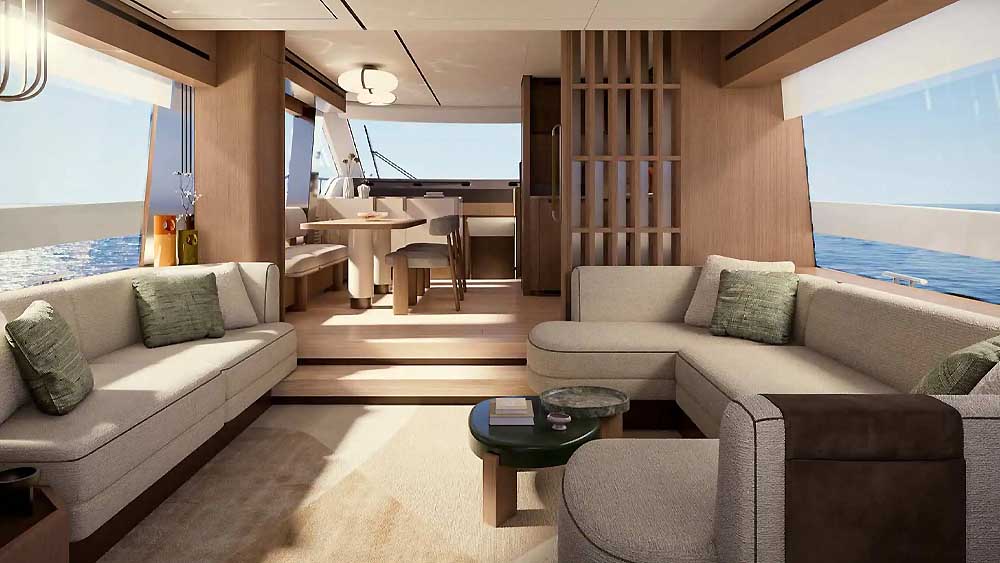
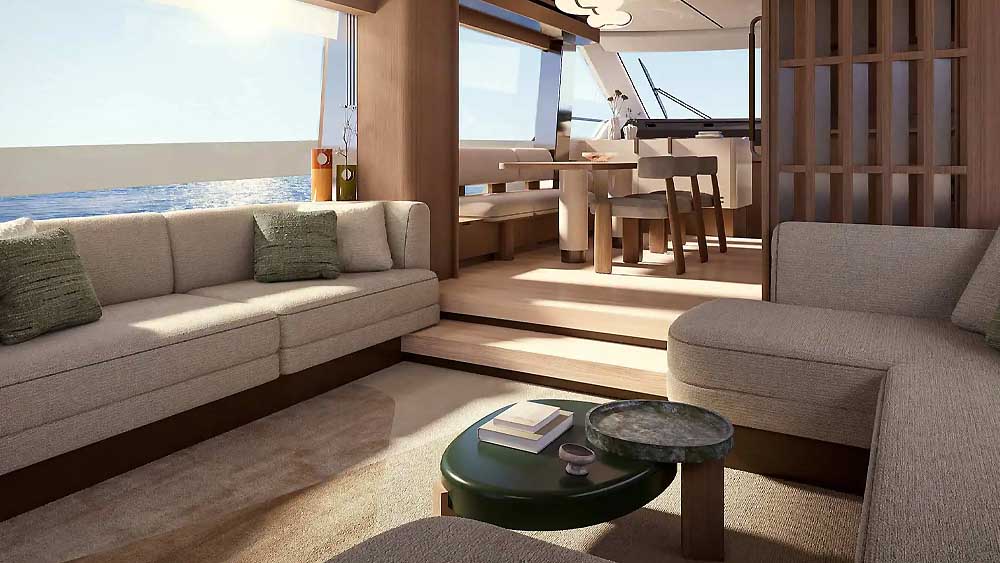
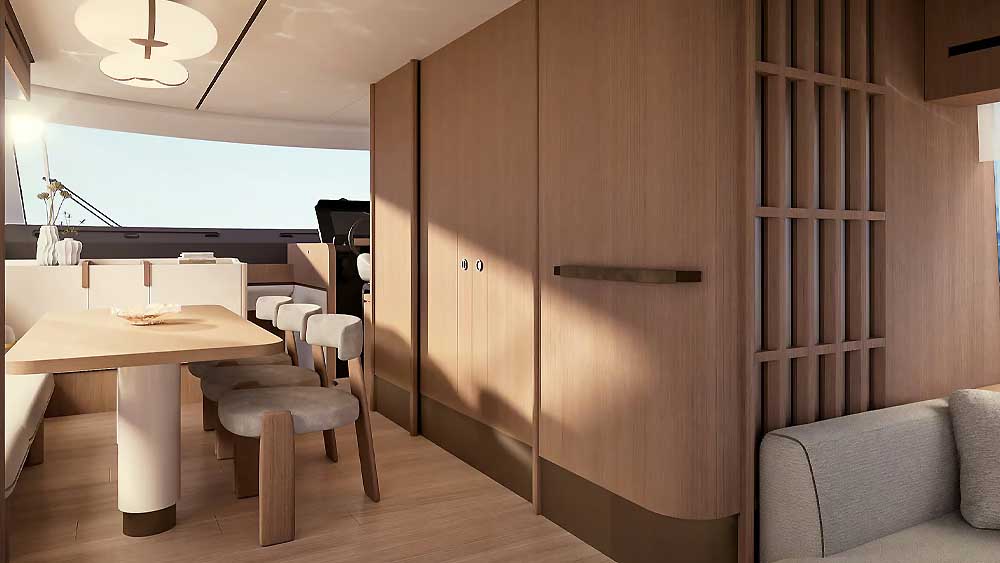
The main deck separates the conversation area from the dining space while maintaining visual continuity throughout the interior. Two opposing sofas define the living area, while the materials and furniture introduce a more residential interpretation of contemporary Italian design.
According to Azimut, finishes include suede leather, cc-Tapis carpeting, Green River marble and a Taj Mahal marble dining table. Dining chairs are designed by Patricia Urquiola for Andreu World.
A brise-soleil made from timber and brushed bronze slats partially screens the galley, allowing it to alternate between open-plan use and greater privacy.
Four cabins on the lower deck
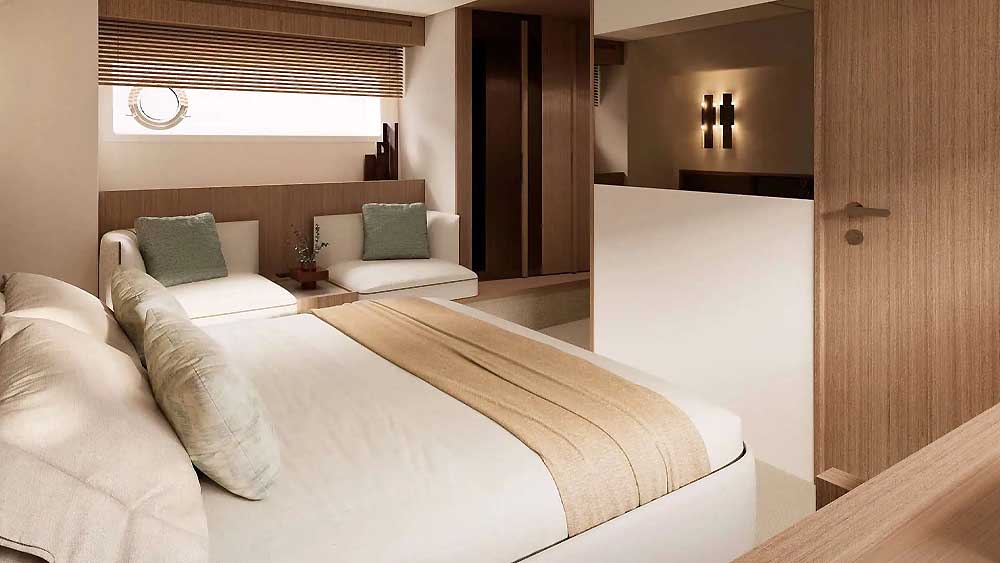
The lower deck accommodates four cabins. The owner’s suite is positioned amidships and combines Bronze Amani marble with mirrored surfaces and diagonal architectural lines.
Azimut has also positioned the fuel tanks between the owner’s suite and the engine room, using their location as an additional acoustic barrier between the accommodation and machinery spaces.
Declared capacities are 3,900 litres of fuel and 1,000 litres of fresh water.
Carbon Tech reduces structural weight
The superstructure makes extensive use of carbon fibre through Azimut’s Carbon Tech programme. According to the yard, this technology can reduce the weight of yacht superstructures by as much as 30%, helping lower the centre of gravity while allowing greater freedom in the distribution of onboard volumes.
Azimut also classifies the Fly 70 as a Low Emission Yacht. Under the yard’s own comparative criteria, this identifies yachts offering at least 20% lower fuel consumption than boats of comparable size and weight fitted with conventional hard-chine hulls and shaft propulsion.
Silent Technology makes its debut on the Fly 70
The Fly 70 also introduces a new solution developed under the Azimut Silent Technology programme.
The generator exhaust treatment system combines a silencer, ceramic elements and a nitrogen oxide catalyst. Azimut states that the system reduces particulate emissions by 95% and halves sound pressure, with noise reduced by more than 5 dBA.
The technology is primarily intended to improve conditions at anchor, where generator operation can be a significant source of both noise and local emissions when shore power is unavailable.
Up to 31 knots with Volvo Penta IPS
Propulsion comes from two Volvo Penta IPS 1350 units rated at 1,000 hp each. According to Azimut’s test figures, the Fly 70 can reach a maximum speed of up to 31 knots and cruise at up to 25 knots.
The Fly 70 therefore develops the Azimut range through a combination of elements rather than one defining feature: a transformable aft cockpit, a flexible flybridge, acoustic engineering and reduced structural weight. Together, they aim to balance performance and onboard space within a yacht just over 21 metres long.
__
Azimut Fly 70
© MED Yachting Editorial Team
Azimut Fly 70, a 21-metre flybridge combining space and technology
__
The information in this article has been sourced from and adapted from official sources and/or press releases, in accordance with our editorial code of ethics.


subscribe free of charge to our WhatsApp channel : scan or click the QR code


MAGAZINE
YACHTS
LIFESTYLE
EVENTS
Partnership
Disclaimer and publishing
Privacy and Cookies (GDPR)
media@med-yachting.com

Euroblu International
MED digital publishing
Via Giosué Carducci, 10
00187 Roma IT
PI 14592991005
GoogleMap
© 2019, MED-YACHTING & LIFESTYLE MAGAZINE All rights reserved.