

- MEDITERRANEAN YACHTING MAGAZINE
Back to previous page Language Italian Spanish
Pioneer PY60, Italian design meets solar-electric propulsion
Cossutti & Ganz and Micheletti + Partners shape the Pioneer PY60 around efficiency, space and integrated energy systems
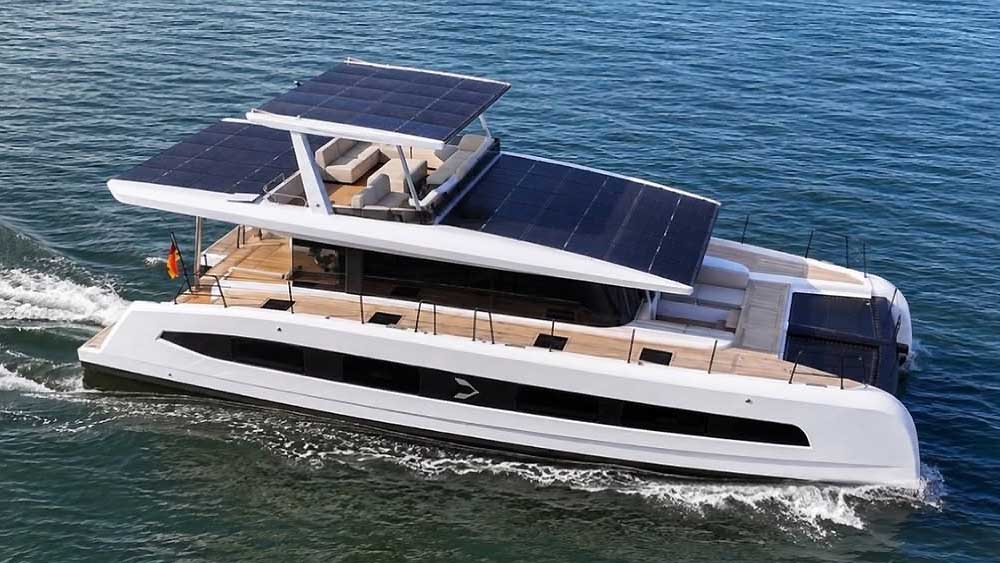
Pioneer PY60 combines Italian design, German construction and solar-electric propulsion in an 18.30-metre power catamaran
The Pioneer PY60 begins with a clear design principle: form, naval architecture and the energy system should be developed together. Built in Germany by Pioneer Yachts, the new power catamaran combines exterior design and naval architecture by Cossutti & Ganz with interior salon design by Micheletti + Partners.
Efficiency defines the design
On the PY60, styling is closely connected to the requirements of solar-electric propulsion. Hull geometry, proportions and weight distribution have been developed to reduce resistance and limit energy demand while under way.
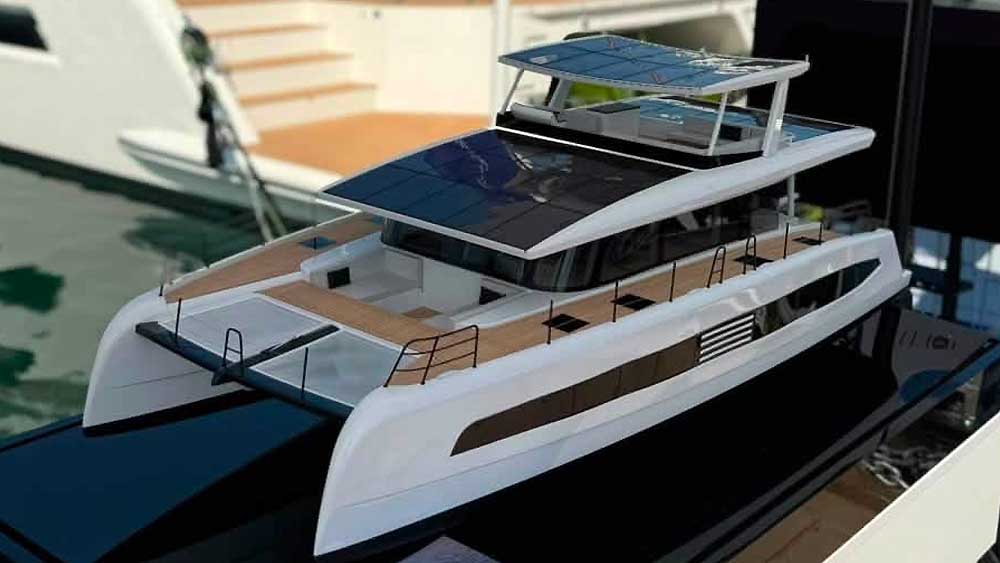
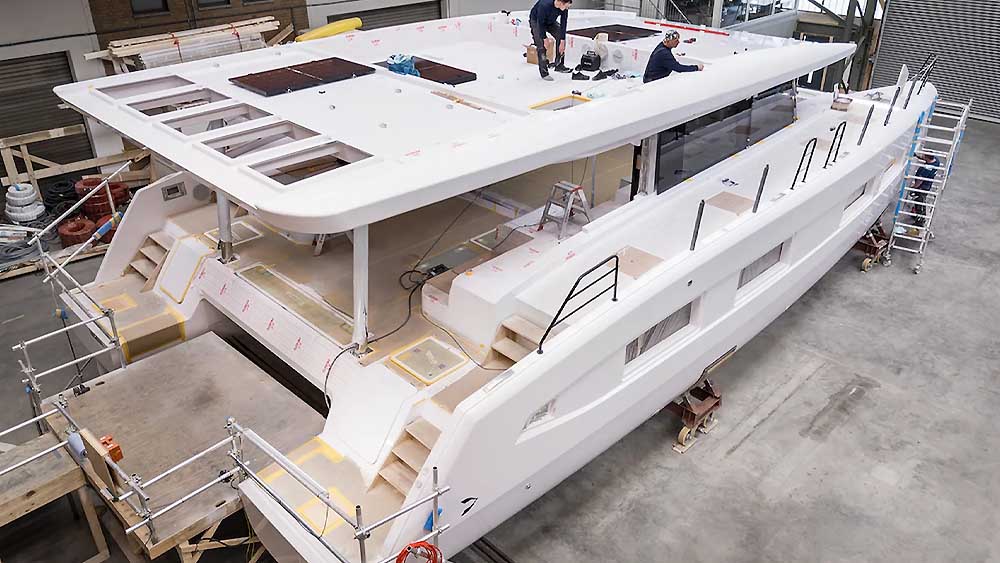
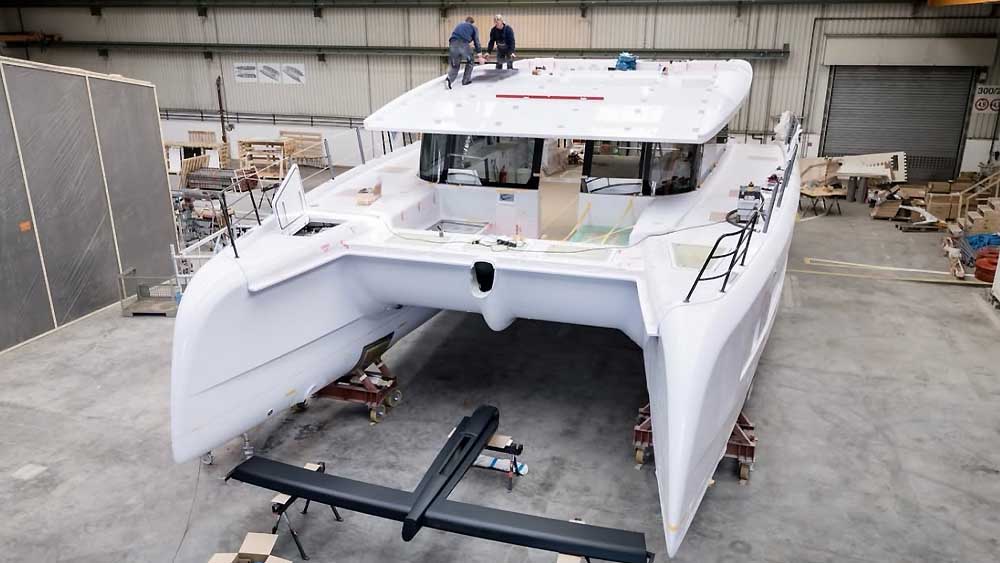
The result is an 18.30-metre catamaran with an 8.88-metre beam, 0.80-metre draught and a declared lightship displacement of 30 tonnes. The platform provides substantial volume while maintaining a visually controlled profile through continuous surfaces and relatively low proportions.
Cossutti & Ganz shape the hull and proportions
Cossutti & Ganz are responsible for both naval architecture and exterior design. The yacht therefore does not begin with a technical platform followed by an applied exterior treatment. Hydrodynamic efficiency and form are developed as part of the same process.
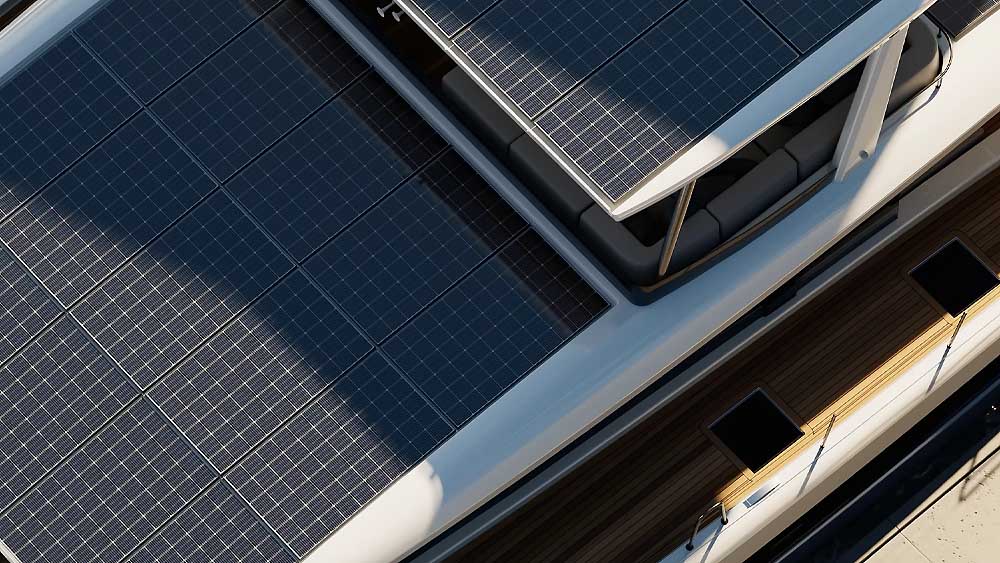
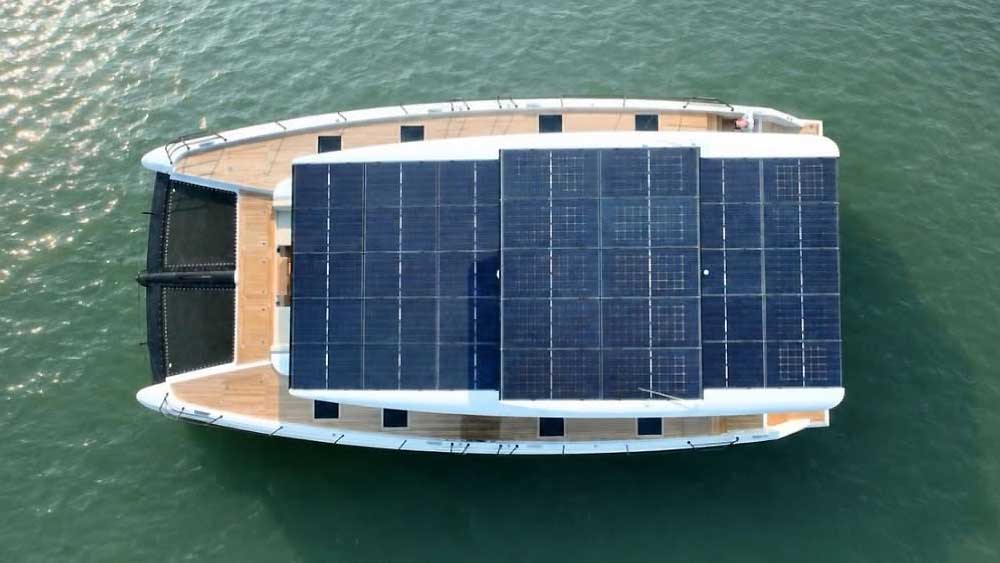
The large upper surface required to accommodate 16.7 kWp of photovoltaic capacity becomes part of the yacht’s architecture. Rather than functioning simply as a support for solar panels, the roof contributes to the proportions and continuity of the overall profile.
Three levels and around 250 square metres of space
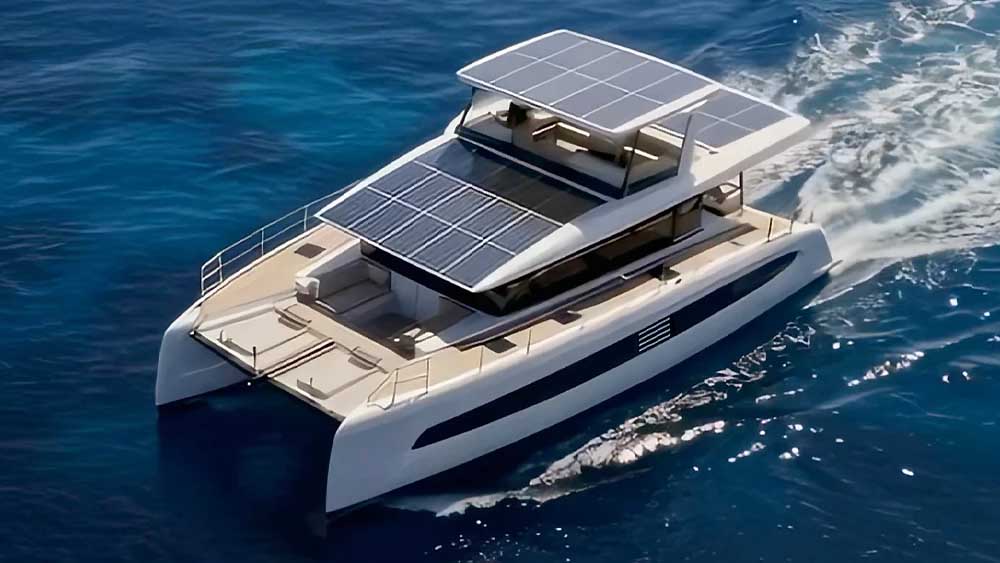
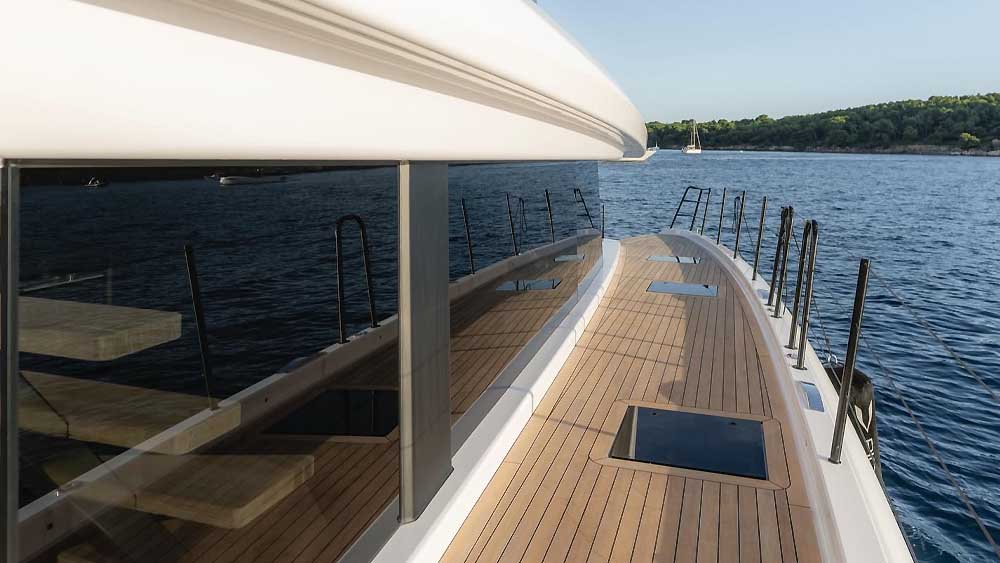
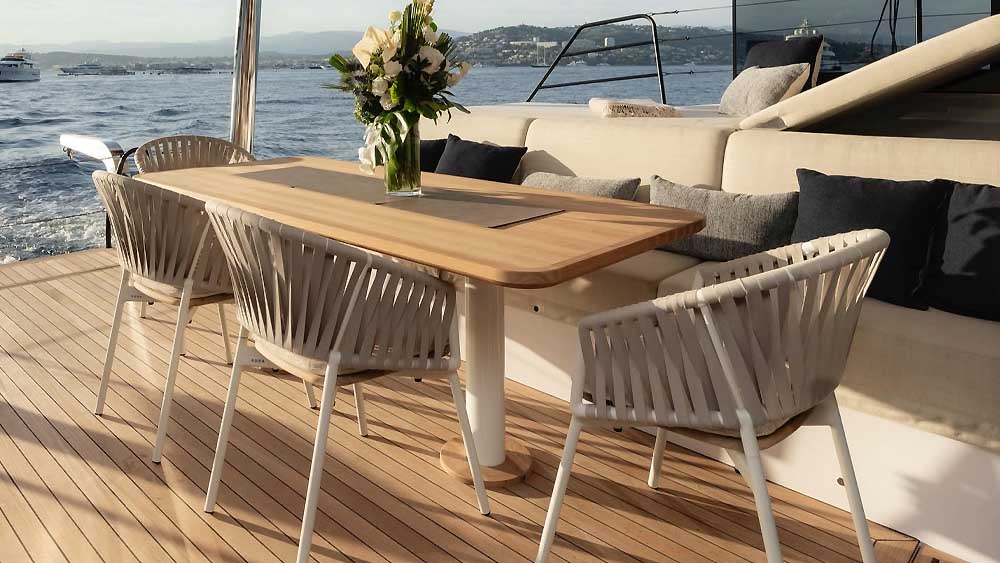
The beam typical of a catamaran is used to create around 250 m² distributed across three levels. Interior and exterior areas are conceived as a continuous sequence, reducing the visual separation between the saloon, cockpit and open spaces.
The first yacht, Pioneer One, has a four-cabin interior arrangement. Large glazed surfaces and the organisation of the saloon focus on spatial perception and visual continuity with the surroundings.
Forward, two large trampolines remain part of the layout, a solution more commonly associated with sailing catamarans than with the solid foredecks adopted by many contemporary powercats.
Interiors by Micheletti + Partners
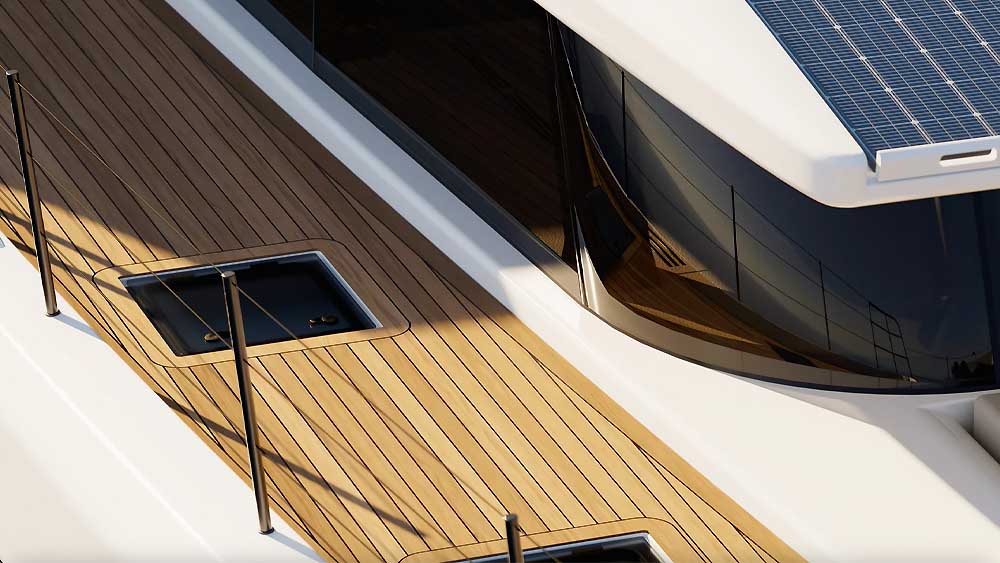
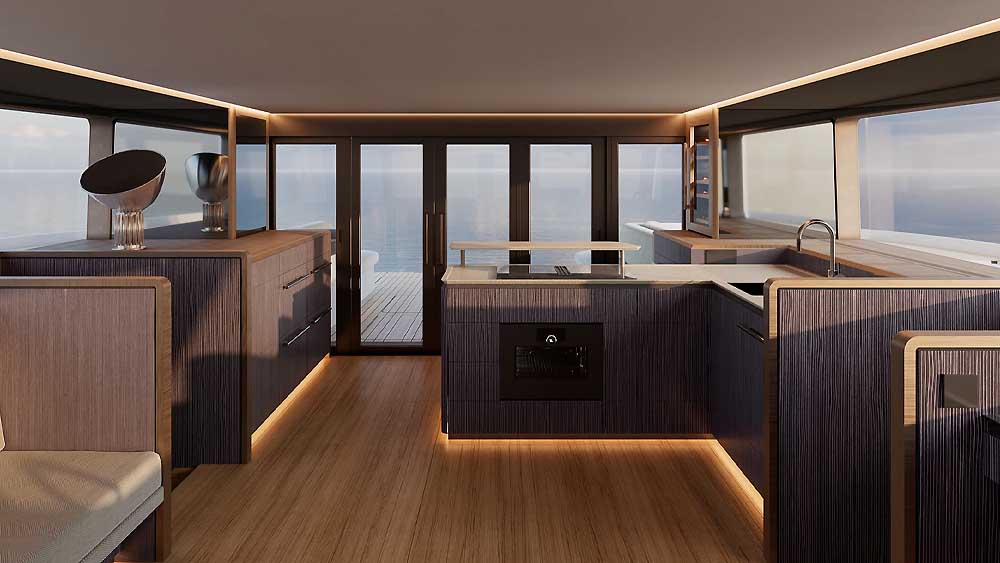
The interior salon design is by Micheletti + Partners. Clean lines, natural light and restrained decorative elements define spaces intended to remain comfortable during extended periods aboard.
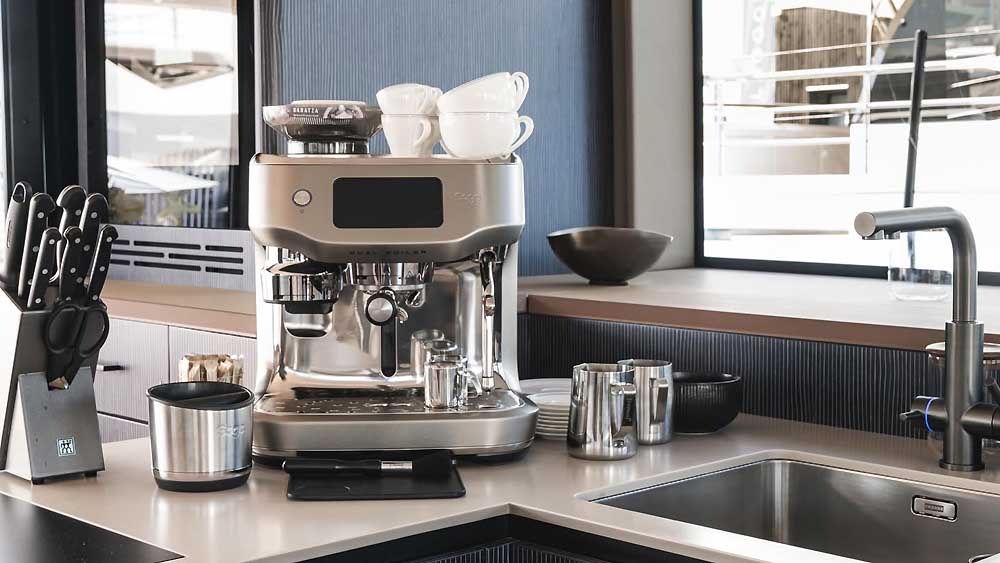
This visual simplicity reflects the technical approach pursued by the builder. Comfort is not treated purely as a question of volume, but also in terms of reduced noise, straightforward operation and systems designed to remain comparatively easy to manage.
Technology shapes the architecture
The PY60 uses a 48-volt electrical architecture, two 50 kW propulsion motors and an LFP battery bank of at least 246 kWh. Solar generation is supported by two auxiliary power units rated at a minimum of 11 kW each.
According to Pioneer Yachts, stated range at 5 knots is 150 nautical miles in electric operation and 5,000 nautical miles in hybrid configuration. Declared maximum speed is 11 knots.
These figures help explain why the PY60’s design cannot be separated from its energy system. Available surface area, weight, hull resistance and technical volumes become elements of the same design equation.
Pioneer One as a validation platform
The first yacht, Pioneer One, entered the water in July 2026 and made its world premiere at the Cannes Yachting Festival in September. Founder Mike Frank also uses the yacht as an operational platform for gathering data under real conditions.
Pioneer Yachts says information collected through operation will inform the development of subsequent yachts. This makes the PY60 closer to an evolving engineering platform than to a product defined solely through preliminary calculations.
When form and system are developed together
From a design perspective, the most relevant aspect of the Pioneer PY60 is the absence of a clear separation between styling and engineering. The yacht’s architecture responds to energy requirements, while those requirements are integrated into a form intended to remain coherent and practical.
The combination of Italian design and German construction illustrates how electrification can also become a design question: rather than adding technology to an existing yacht, the entire platform is developed around the way that technology needs to operate.
__
Pioneer Yachts, PY60
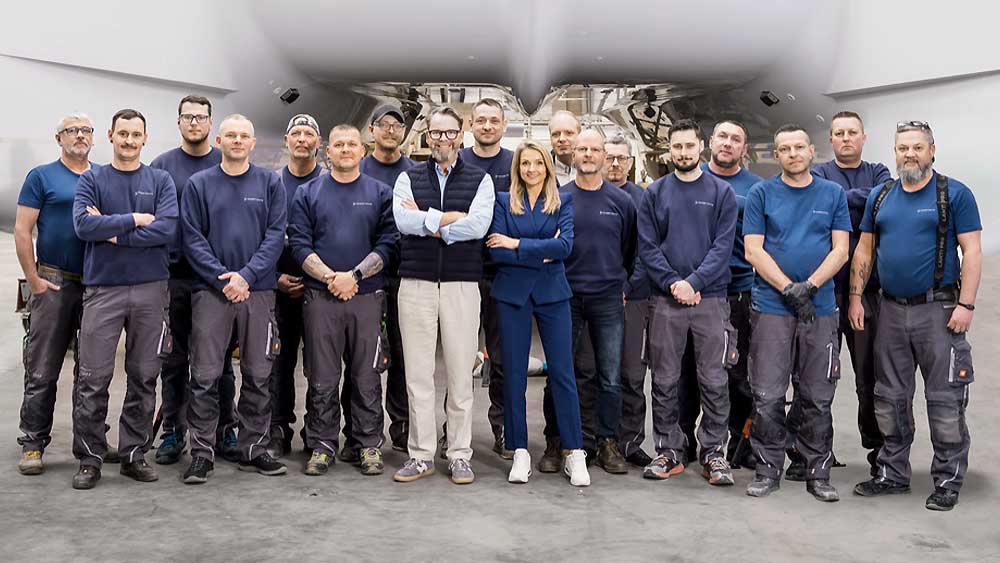

© MED Yachting Editorial Team
Pioneer PY60, Italian design meets solar-electric propulsion
__
The information in this article has been sourced from and adapted from official sources and/or press releases, in accordance with our editorial code of ethics.



subscribe free of charge to our WhatsApp channel : scan or click the QR code



MAGAZINE
YACHTS
LIFESTYLE
EVENTS
Partnership
Disclaimer and publishing
Privacy and Cookies (GDPR)
media@med-yachting.com

Euroblu International
MED digital publishing
Via Giosué Carducci, 10
00187 Roma IT
PI 14592991005
GoogleMap
© 2019, MED-YACHTING & LIFESTYLE MAGAZINE All rights reserved.