

- MEDITERRANEAN YACHTING MAGAZINE
Back to previous page Language Italian Spanish
Gitana 18, designing flight for the open ocean
Thirty-two metres of carbon, new appendages and a design developed from Gitana 17’s experience to make offshore flight more stable and efficient
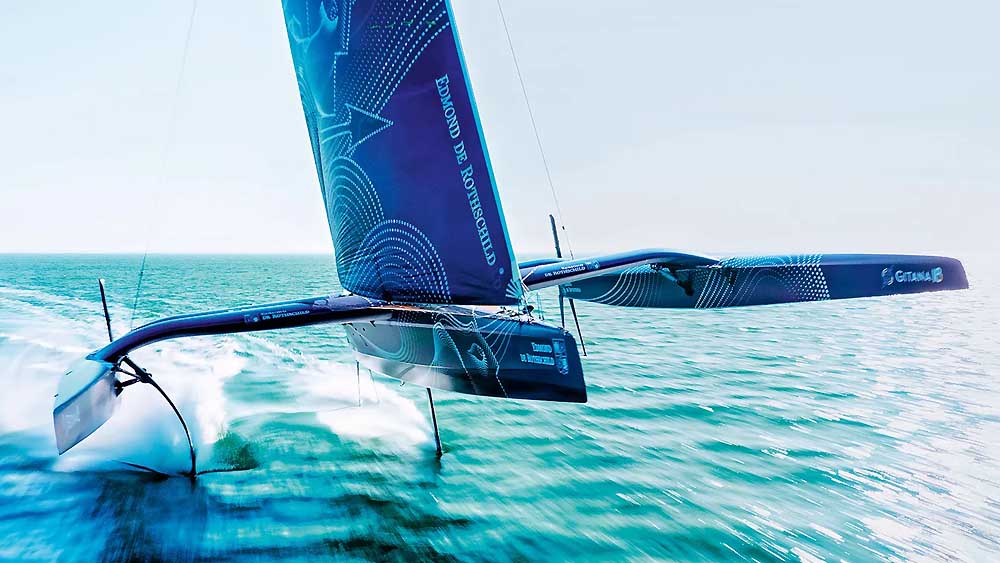
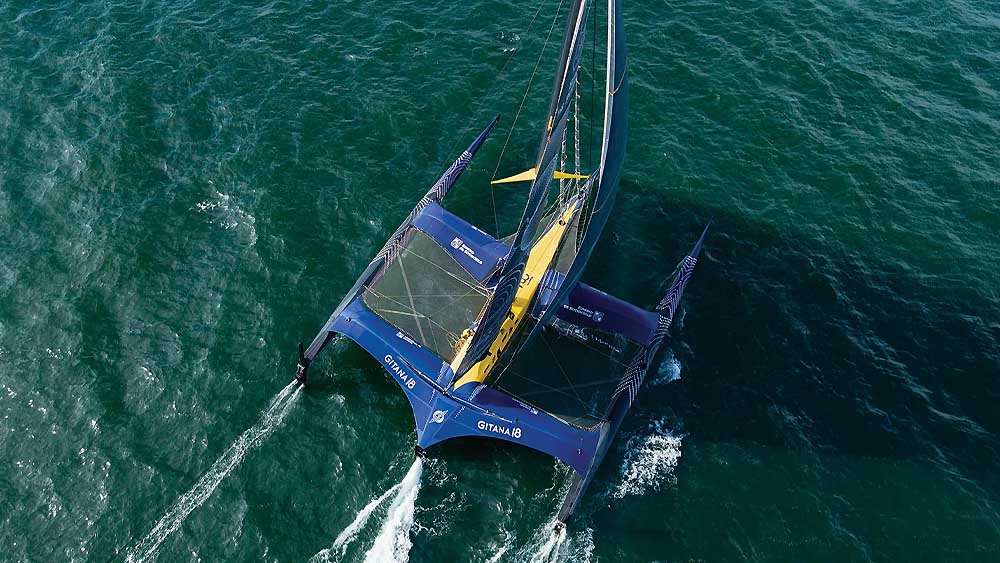
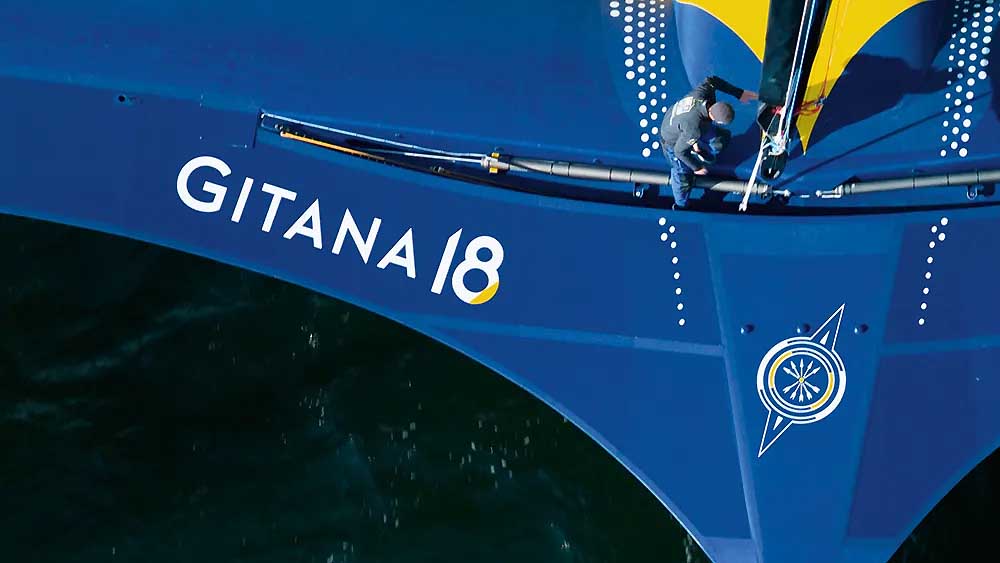
Gitana 18 opens a new generation of flying offshore trimarans, turning experience, data and research into a 32-metre Maxi Edmond de Rothschild
Gitana 18 began with a question that goes beyond the pursuit of outright speed: how can a 32-metre trimaran fly across the open ocean with greater consistency, control and efficiency?
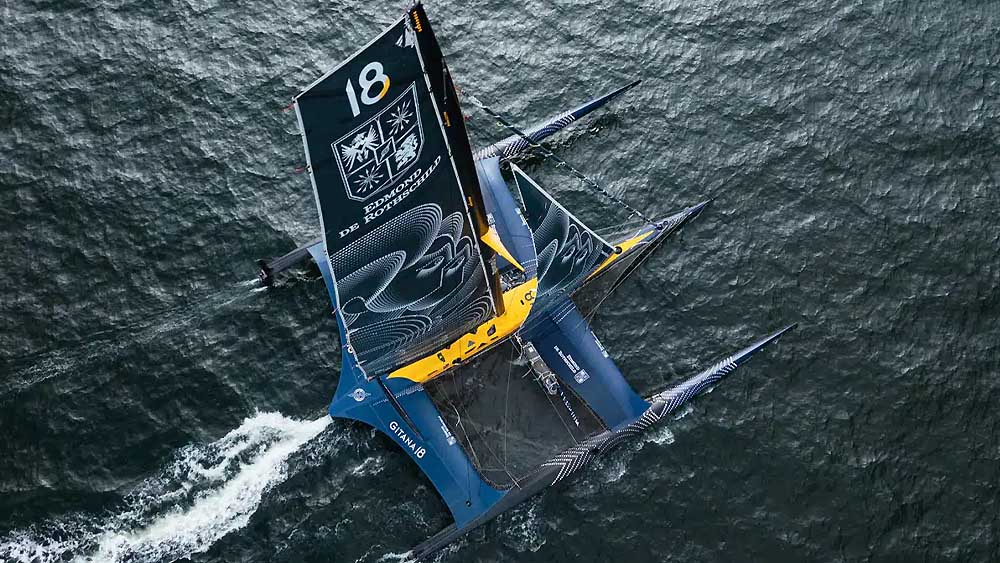
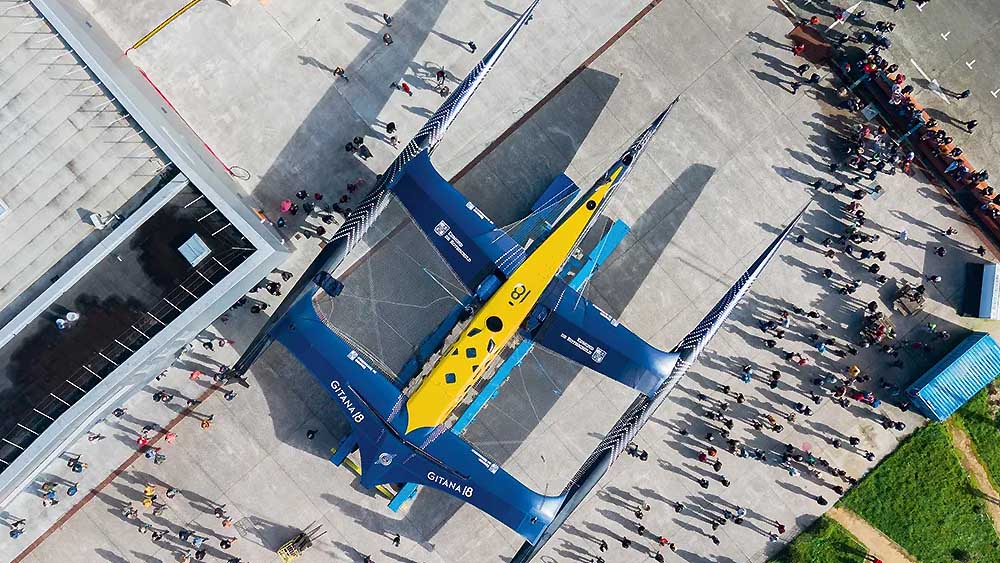
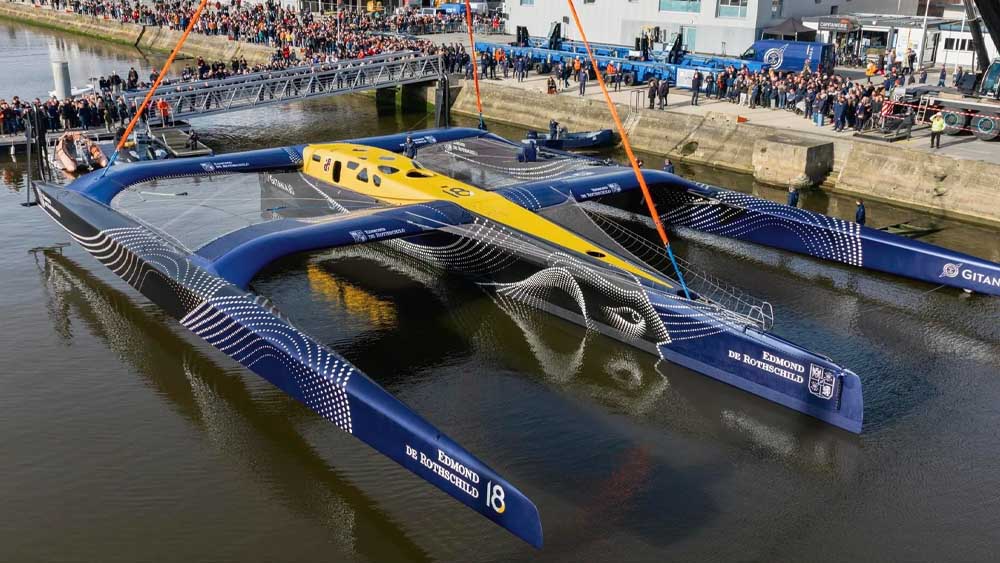
This is the challenge around which Gitana Team and the design group led by Guillaume Verdier developed the new Maxi Edmond de Rothschild. A multihull measuring 32 metres long and 23 metres wide, it draws on the experience of its predecessor without simply evolving its shapes.
The objective is to take offshore flight further: not merely lifting out of the water, but making flight an increasingly natural condition even when the sea bears little resemblance to the predictable surface of an inshore racecourse.
From Gitana 17 to a new generation
When Gitana 17 was unveiled in 2017, the project already had a clear ambition: to take large multihull flight beyond protected waters and into the open ocean.
The following years transformed experimentation into practical experience. Thousands of miles, races, records, solo passages and crewed sailing generated information that now forms a fundamental part of the new project.
Gitana 18 therefore starts with something particularly valuable: real-world knowledge of how a large flying trimaran behaves offshore.
The new boat retains dimensions similar to its predecessor, but substantially revises its aerodynamics, appendages, rig and overall architecture. According to Gitana Team, the focus is on two principal objectives: improving the "engine" — the sails and everything above deck — and reducing drag.
Flying earlier, flying better
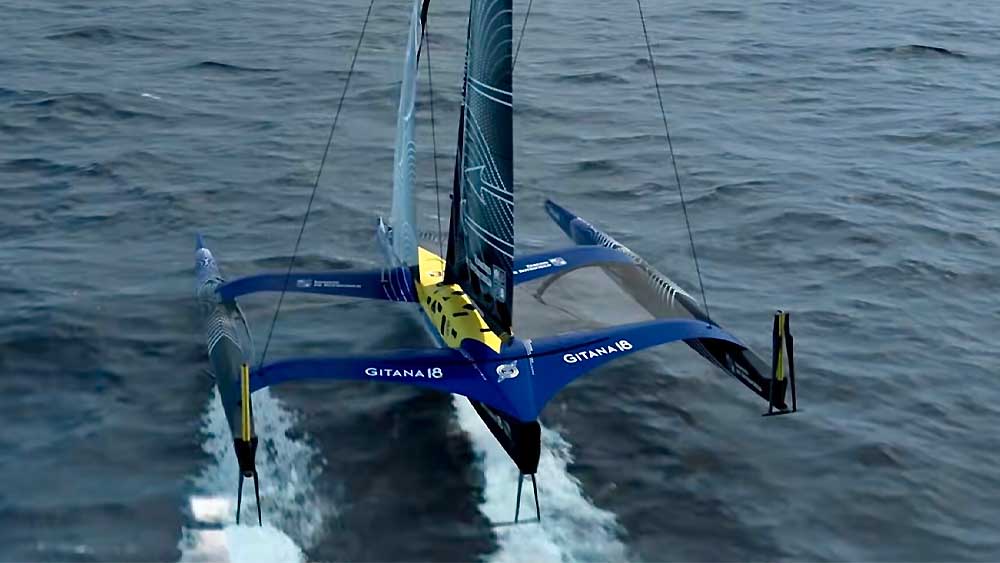
Foils, rudders and the central daggerboard consequently become some of the decisive areas of the project.
Generating lift alone is not enough. An Ultim intended for ocean racing must maintain balance while the surface beneath its hulls is constantly changing, speeds rise and conditions can alter rapidly.
Gitana 18 therefore introduces a new generation of appendages developed from the experience gained with Gitana 17. The team’s stated objective is to take off earlier and improve high-speed performance in heavy seas.
This is an important distinction from the simpler image of a foil as a device that merely raises a hull from the water. Here, the challenge is to control a dynamic system in which aerodynamics, hydrodynamics, attitude and power must remain in constant dialogue.
The digital laboratory before the ocean
Much of this work begins long before the carbon reaches the water.
The new Maxi Edmond de Rothschild is the result of close collaboration between Gitana’s in-house design office, headed by Sébastien Sainson, and Guillaume Verdier’s team. Data accumulated with Gitana 17 allows design hypotheses to be compared with years of real-world behaviour.
Simulation therefore becomes an integral part of the process. Components, geometries, ergonomics and systems can be studied digitally before reaching their final physical form.
The cockpit and living cell were also developed using virtual-reality tools, allowing the team to evaluate control positions, crew movements and the organisation of the space that becomes the yacht’s true operational centre offshore.
Technology does not replace the sailors’ experience. Instead, it helps transform that experience into information designers can use.
A machine designed for people and ocean
Extreme performance has a very practical limit: the person who must control it.
Gitana 18 was designed to sail both crewed and single-handed. Systems capable of managing enormous loads must therefore remain controllable by very few people and, in certain conditions, by a single skipper.
This is one reason why Charles Caudrelier and the sailing team have been directly involved in the design process. Ergonomics, visibility, protection, access to controls and speed of intervention are not secondary to performance; they are part of it.
On a yacht of this kind, reducing workload means helping the sailor preserve concentration when high speeds are sustained for hours or days.
Building 32 metres of precision
For Gitana 18, the team entrusted construction to CDK Technologies in Lorient, close to Gitana’s technical base.
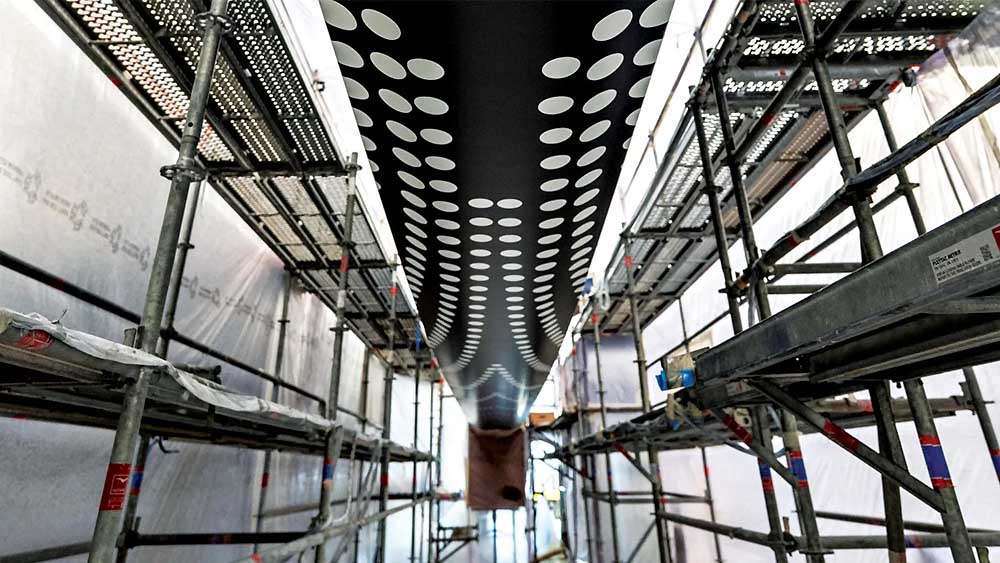
The project required more than twenty months of work, with the yard estimating around 200,000 hours of construction. The figures help illustrate how far a contemporary Ultim is from the simple idea of a hull fitted with mast, sails and appendages.
The carbon platform must integrate structures, hydraulic systems, electronics, appendages, rigging and a network of components exposed to immense loads. Every element must be light, yet reliable enough to face thousands of miles far from shore.
It is one of the most fascinating contradictions of modern offshore sailing: removing every unnecessary gram without sacrificing strength.
The mast becomes part of the system
Research is not confined below the waterline.
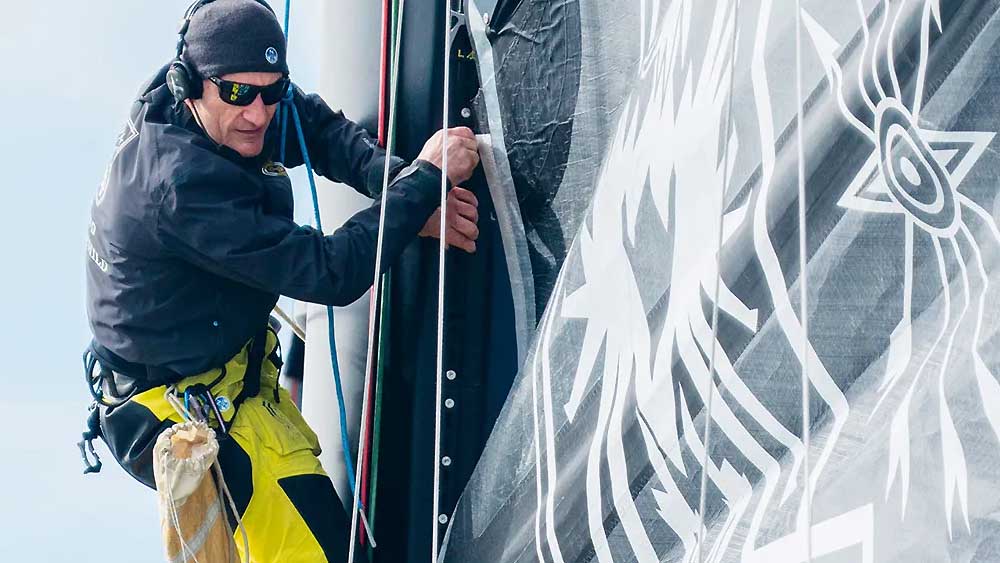
Gitana Team has also carried out significant work on the rig and the trimaran’s aerodynamics. During the first sea trials in March 2026, even before the foils were fitted as part of the subsequent development programme, the crew began testing major innovations involving the mast and spreaders.
The concept is increasingly to avoid treating sails, rig, platform and appendages as separate systems.
At these speeds, everything above deck also makes a significant contribution to overall efficiency. Reducing aerodynamic drag and controlling sail shape more effectively influence the same balance that allows the trimaran to sustain flight.
From the virtual world to the sea
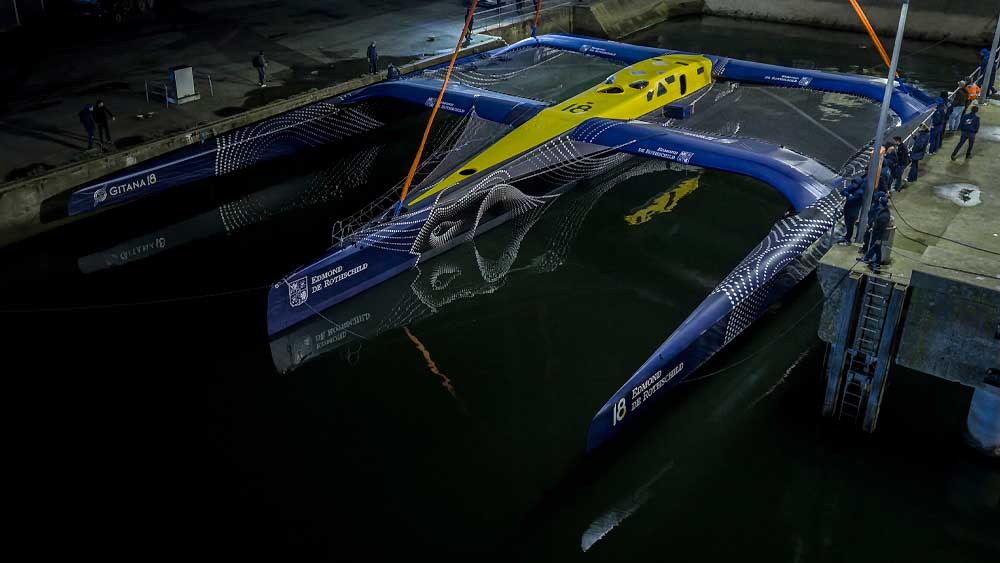
After more than two years of development and construction, the Maxi Edmond de Rothschild was launched in Lorient on 14 February 2026.
The first Atlantic sea trials followed on 10 March. The programme was deliberately progressive: mechanical, hydraulic and electronic systems first, followed by sails, steering, rudders and the innovations associated with the mast. The foils were scheduled to be introduced later in the commissioning programme.
The method says much about the complexity of the project. A boat this innovative cannot be considered complete simply because it touches the water.
Launch day instead marks the transition from a virtual and industrial laboratory to one that is considerably harder to control: the ocean.
When technology and art share the same surface
Gitana 18 is not solely about engineering.
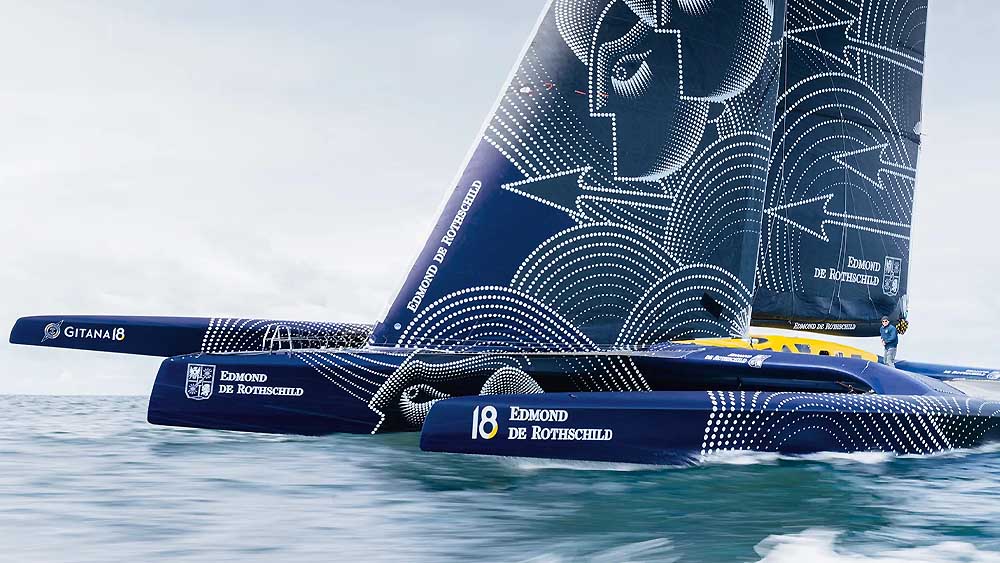
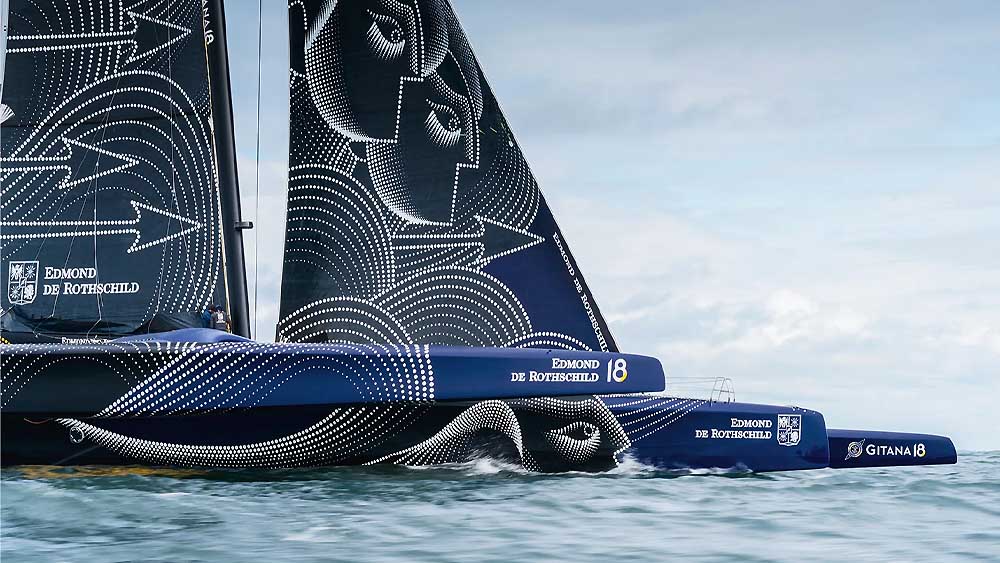
Ariane de Rothschild continued the collaboration initiated with the Palais de Tokyo, once again turning a large racing trimaran into an artwork travelling across the sea. This time, its visual identity was entrusted to French artists Florian and Michaël Quistrebert, with Jean-Baptiste Epron contributing to its application to the yacht.
The hulls and sails together become an artistic surface of around 2,000 square metres.
It creates an unusual contrast: one of the most technologically advanced sailing machines of its generation carries an artwork not designed to remain static inside an exhibition space, but to change continuously with light, water, speed and movement.
Flight as a new form of sailing
Gitana Team describes the new Maxi Edmond de Rothschild as the first representative of the second generation of flying Ultims.
The distinction matters.
The first generation demonstrated that a large trimaran could fly across the open ocean. The next challenge is to make that flight more usable, efficient and stable, and capable of being sustained for longer periods in real conditions.
This is where Gitana 18 becomes more than a machine built to win a race or break a record.
It is a laboratory in which designers and sailors are exploring what the next stage of offshore sailing might look like.
At these speeds, the boundary between sailing and flying is becoming increasingly difficult to define. Perhaps the real goal is no longer simply to go faster, but to learn how to remain in flight while the ocean continues beneath you.
__
Gitana Team

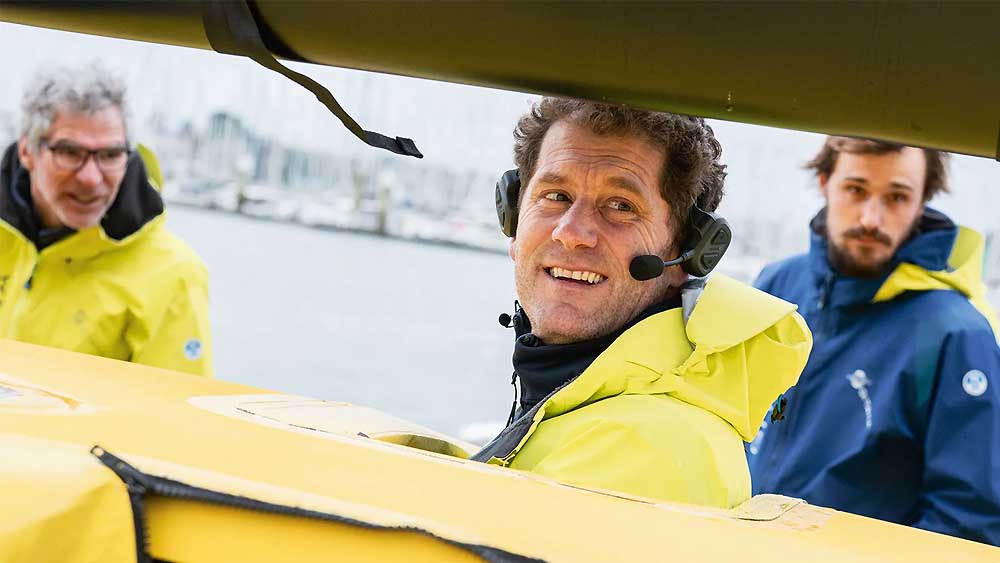
© MED Yachting Editorial Team
Gitana 18, designing flight for the open ocean
__
The information in this article has been sourced from and adapted from official sources and/or press releases, in accordance with our editorial code of ethics.


subscribe free of charge to our WhatsApp channel : scan or click the QR code



MAGAZINE
YACHTS
LIFESTYLE
EVENTS
Partnership
Disclaimer and publishing
Privacy and Cookies (GDPR)
media@med-yachting.com

Euroblu International
MED digital publishing
Via Giosué Carducci, 10
00187 Roma IT
PI 14592991005
GoogleMap
© 2019, MED-YACHTING & LIFESTYLE MAGAZINE All rights reserved.