

- MEDITERRANEAN YACHTING MAGAZINE
Back to previous page Language Italian Spanish
ENATA invests in Manta Foils as electric mobility meets hydrofoil technology
From carbon component manufacturing to joint technology development, ENATA and Manta Foils are expanding their work on next-generation electric marine mobility
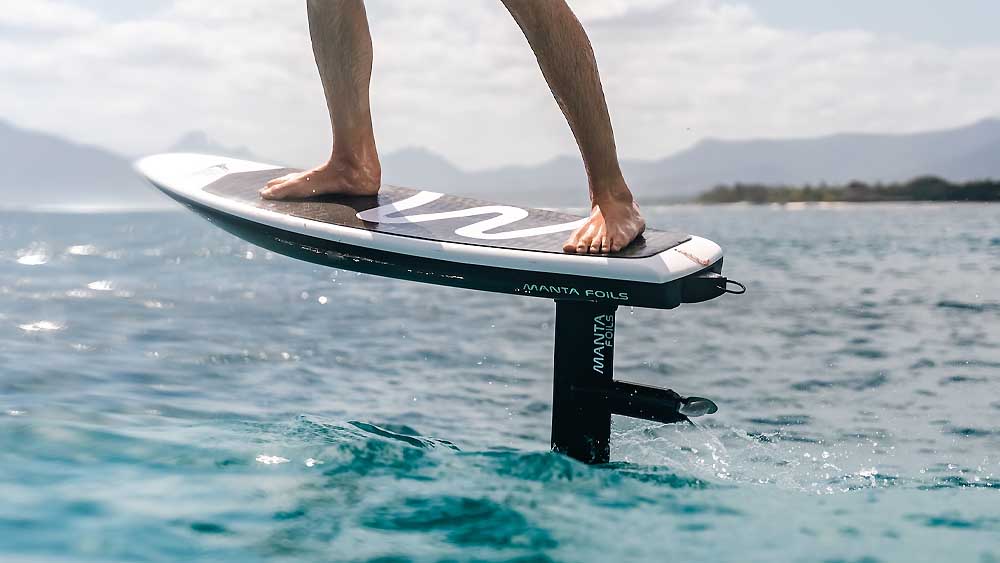
ENATA takes a minority stake in Manta Foils, strengthening a partnership combining carbon composites, electric propulsion and hydrofoil technology
The financial transaction, however, is only part of the story. The two companies already work together at an industrial level, and the new investment is designed to bring together capabilities that are becoming increasingly relevant to marine mobility: lightweight carbon structures, electric propulsion, integrated electronics and hydrofoil technology.
This is therefore not a partnership starting from scratch. ENATA already manufactures components and boards for Manta Foils through its OEM operations and has expertise ranging from advanced composites to hydrofoil vessels and electronic control systems.
A partnership moving closer
The relationship between the two companies began with manufacturing. ENATA has supplied Manta Foils with high-performance carbon composite components, drawing on in-house capabilities that include design, mould production, manufacturing and testing.
Following the new investment, cooperation is expected to expand further across engineering, manufacturing and research and development, with the stated objective of supporting the development and industrialisation of future electric hydrofoil technologies.
It is an interesting step because it combines two aspects of innovation that do not always progress at the same speed: developing a technology and turning that technology into a repeatable, scalable industrial product.
Manta Foils, from eFoil to Foil Assist
Manta Foils has been involved in foiling for more than twenty years and in recent years has increasingly focused on electrification. The company identifies 2019 as the beginning of its eFoil development and 2023 as its move into Foil Assist systems.
The distinction between the two is significant. With an eFoil, electric propulsion powers the ride, while a Foil Assist system uses a compact motor primarily to help the rider take off onto the foil. Once flying, the rider can use wave or wind energy while reducing or stopping motor assistance.
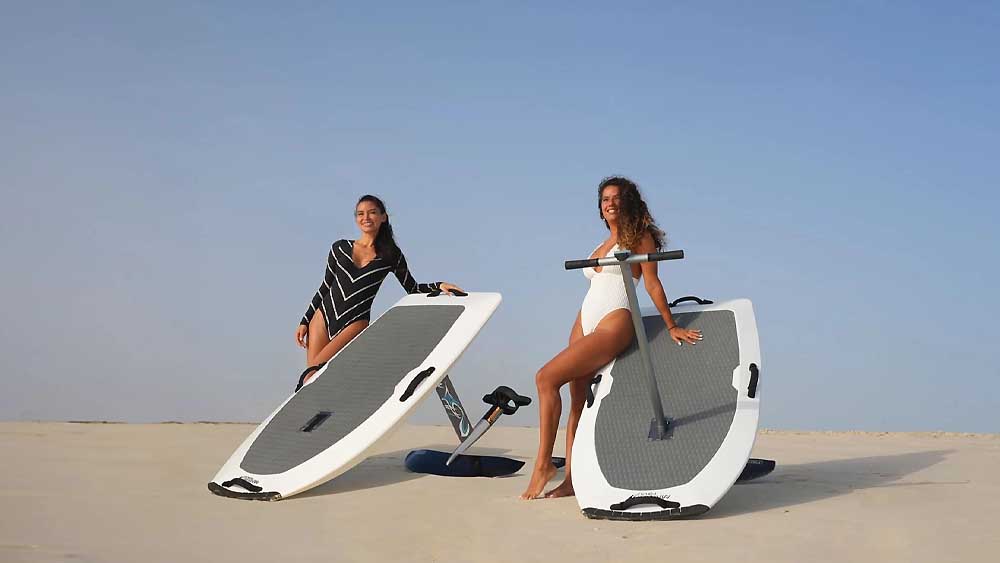
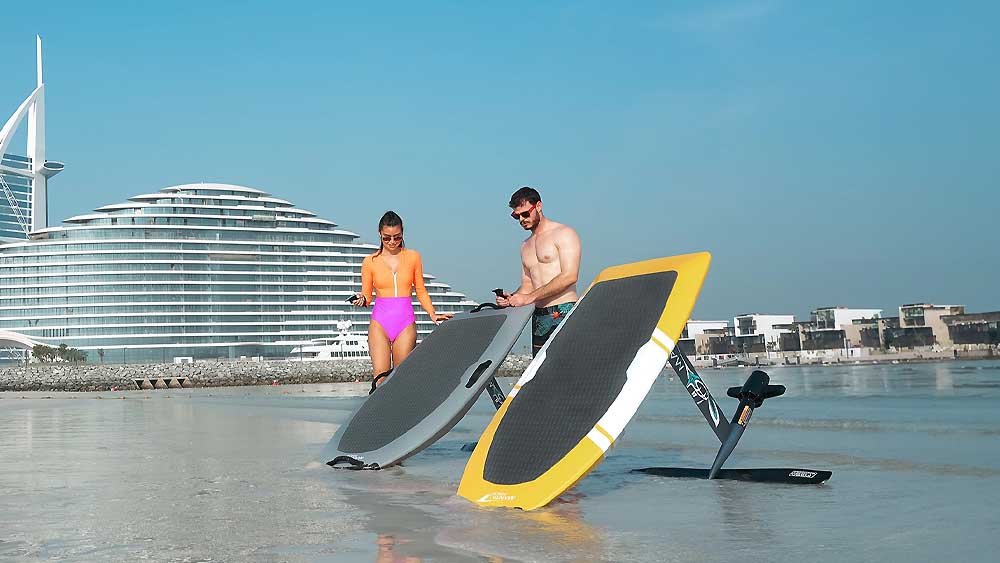
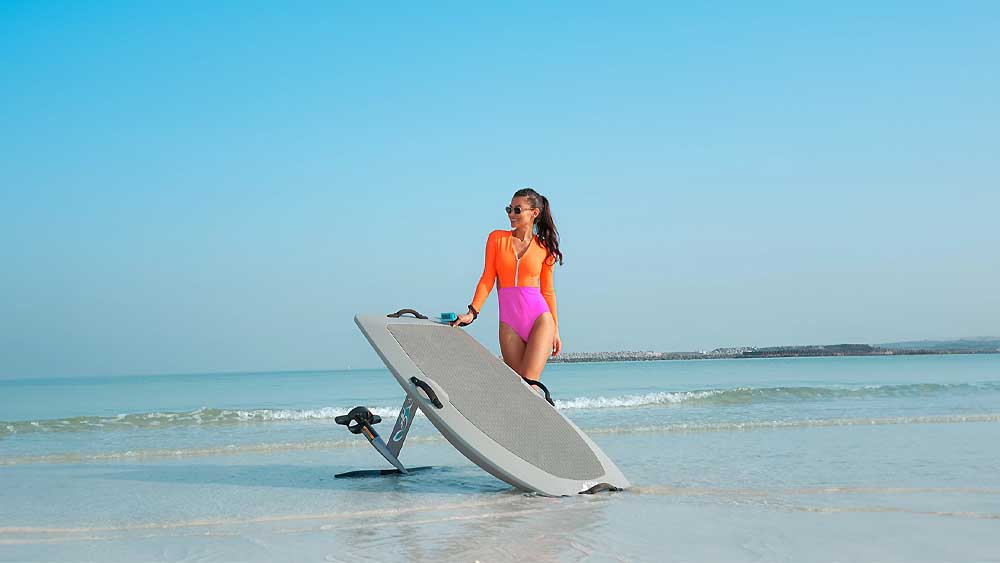
Manta Foils’ current TakeOff platform is built around this modular approach and can be configured for different uses, from prone foiling and downwind to wingfoil and eFoil riding.
Battery, propulsion and electronics become one system
One of the more interesting aspects of Manta Foils’ technology is the integration of its components. Batteries, motor, control electronics, remote and software are treated not as separate elements, but as parts of the same platform.
On the TakeOff Evo, for example, users can select different battery capacities, adjust power levels and access GPS-related functions, battery monitoring, rider profiles and mobile-app connectivity.
This modular approach is also significant from an industrial perspective. A common technology platform can be adapted to different configurations and applications without redesigning the entire system each time.
And scalability is one of the areas highlighted by the cooperation between ENATA and Manta Foils.
Carbon is about more than reducing weight
Weight is particularly important in foiling. Lower mass helps acceleration, take-off and control, but carbon structures must also provide stiffness and strength in components exposed to substantial loads.
ENATA already operates in this field through in-house manufacturing of carbon-fibre structures and components. Its marine division also develops hydrofoil vessels, foils, propulsion systems and the proprietary Wingman control system.
The Manta Foils investment therefore connects two areas of experience that share many principles but operate at different scales: small electric foil systems on one side and technologies developed for larger marine craft on the other.
From water toy to marine mobility
eFoils and Foil Assist systems can certainly be viewed as a new generation of water toys, and this remains an important part of their market. But the technology behind them contains elements with much wider potential.
Energy management, compact electric motors, modular batteries, electronic control, lightweight structures and hydrofoil appendages are also becoming relevant to tenders, light craft and new forms of waterborne mobility.
ENATA says the partnership will also create opportunities to explore electrification solutions and advanced carbon composite technologies for the wider marine industry.
For now, this is a direction for research and development identified by the companies rather than the announcement of a specific product. Yet it may be the most interesting aspect of the investment: understanding how technologies developed around personal foiling can be transferred, adapted or scaled into other marine applications.
When foiling becomes a laboratory
Recent yachting history shows how innovations often emerge first in highly specialised fields before finding wider applications.
Foiling is one of those laboratories. Hydrodynamic drag reduction, automatic attitude control, lightweight structures and electrification are different challenges, but they become closely connected when a craft has to rise above the water and remain stable and efficient.
ENATA already works with this principle through Foiler, its marine platform using retractable hydrofoils and an in-house control system. The group also makes parts of this technology available to other companies through its OEM activities.
Manta Foils applies the same fundamental principle at a different scale, focusing on lighter, more modular systems designed around the rider.
Lighter, smarter and more efficient
ENATA summarises its vision by saying that the future of marine mobility will be lighter, smarter and more efficient.
It is a statement of intent, but it reflects three directions already emerging across the marine industry: reducing weight through advanced materials, increasing the role of electronics in controlling the craft and developing propulsion systems that make better use of available energy.
The investment in Manta Foils does not yet reveal which applications will emerge from the partnership or how quickly they may move beyond eFoils.
But it makes one ongoing development clearer: foiling, electrification and composites are no longer evolving as separate technologies. Increasingly, they are becoming parts of the same system.
And it may be this integration, rather than any individual product, that shapes an important part of marine mobility over the coming years.
__
ENATA Marine
Manta Foils



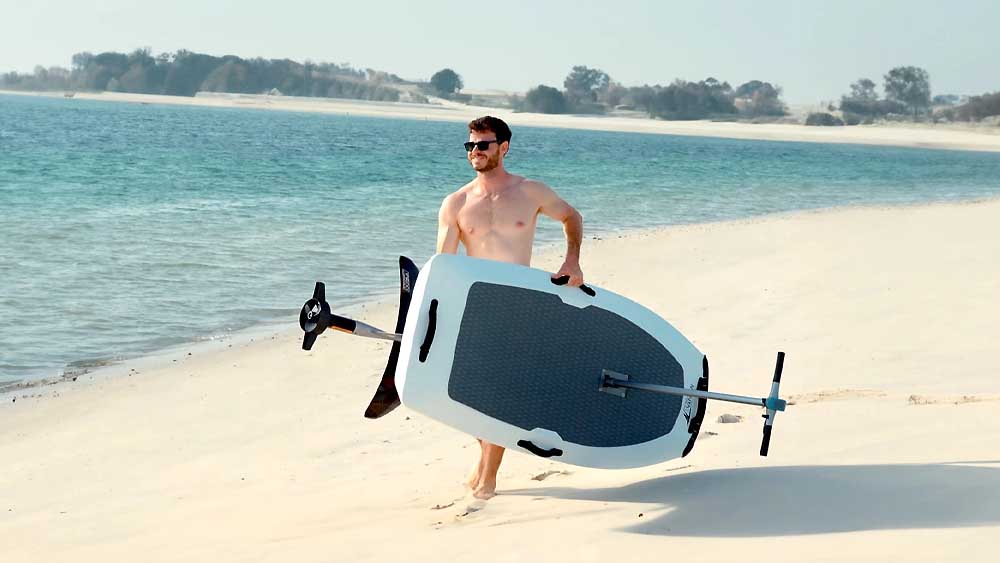
© MED Yachting Editorial Team
ENATA invests in Manta Foils as electric mobility meets hydrofoil technology
__
The information in this article has been sourced from and adapted from official sources and/or press releases, in accordance with our editorial code of ethics.



subscribe free of charge to our WhatsApp channel : scan or click the QR code



MAGAZINE
YACHTS
LIFESTYLE
EVENTS
Partnership
Disclaimer and publishing
Privacy and Cookies (GDPR)
media@med-yachting.com

Euroblu International
MED digital publishing
Via Giosué Carducci, 10
00187 Roma IT
PI 14592991005
GoogleMap
© 2019, MED-YACHTING & LIFESTYLE MAGAZINE All rights reserved.