

- MEDITERRANEAN YACHTING MAGAZINE
Back to previous page Language Italian Spanish
Black Pearl, when the wind becomes energy
Three carbon masts, 2,877 square metres of sail and a system capable of generating electricity under sail make Black Pearl one of the most innovative projects in contemporary yachting
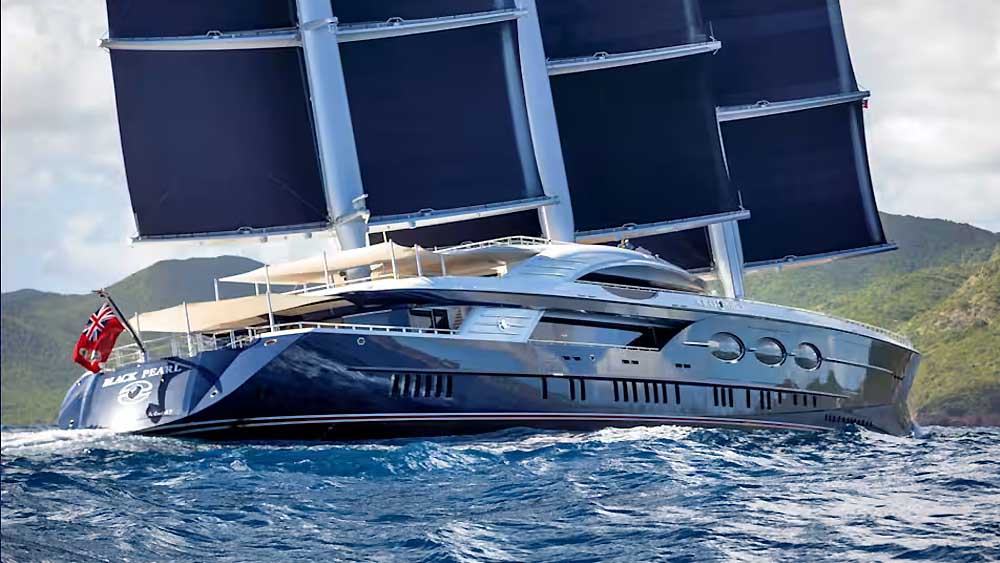
Black Pearl is a 106.7-metre sailing yacht combining DynaRig, hybrid propulsion and energy regeneration to rethink how large yachts can navigate
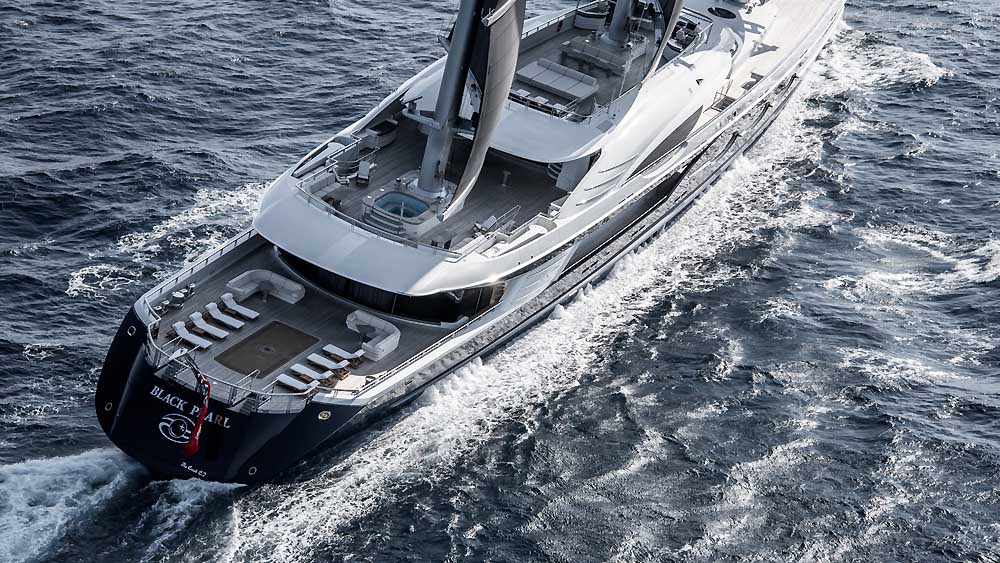
Black Pearl measures 106.7 metres and can set almost 2,900 square metres of sail in around seven minutes. Yet those figures alone do not explain why this Oceanco-built yacht remains an extraordinary project several years after her delivery.
Her most interesting feature is not her size. It is what happens when Black Pearl is sailing: her propellers can become generators, recovering energy from their movement through the water and feeding it back into the yacht’s electrical system. Wind therefore does more than propel the yacht. It can also help produce the energy required to operate her.
It is this idea that transforms Black Pearl from a very large sailing yacht into something closer to a floating laboratory.
Three masts, no standing rigging and almost 2,900 square metres of sail
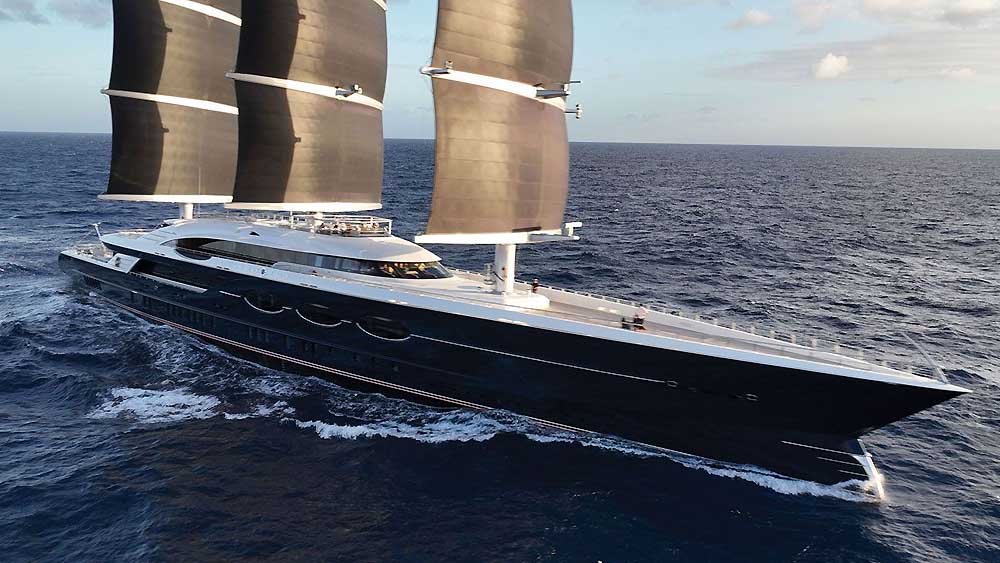
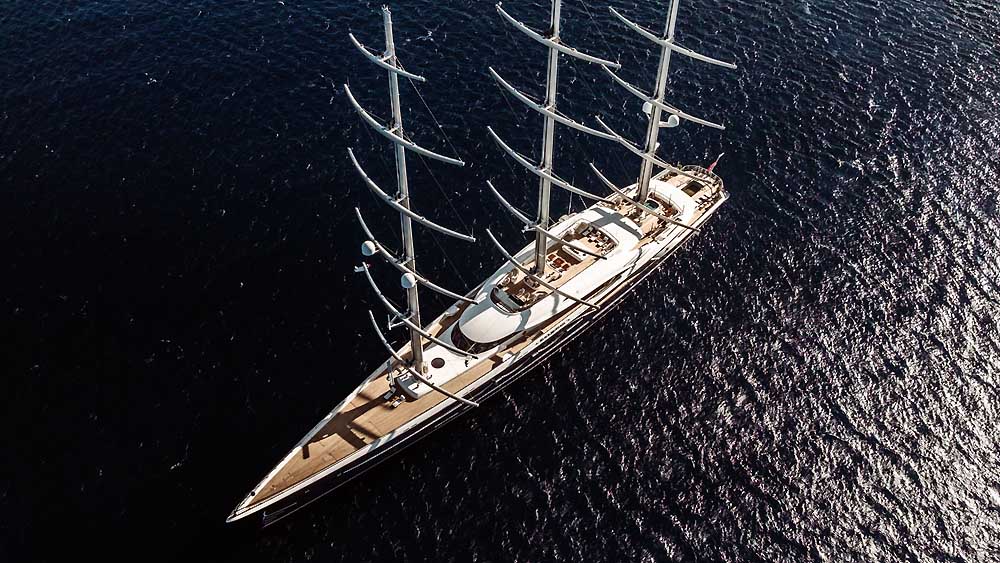
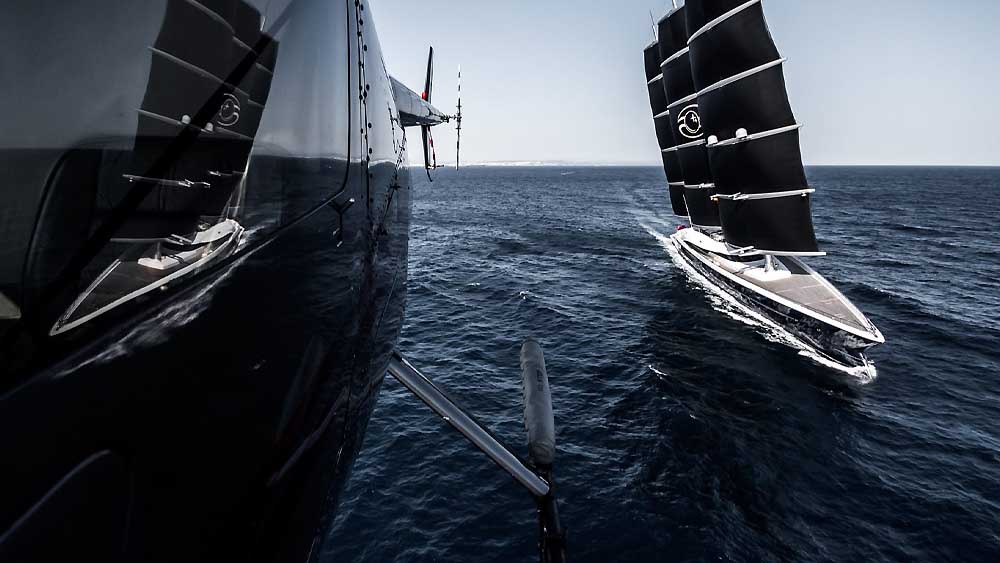
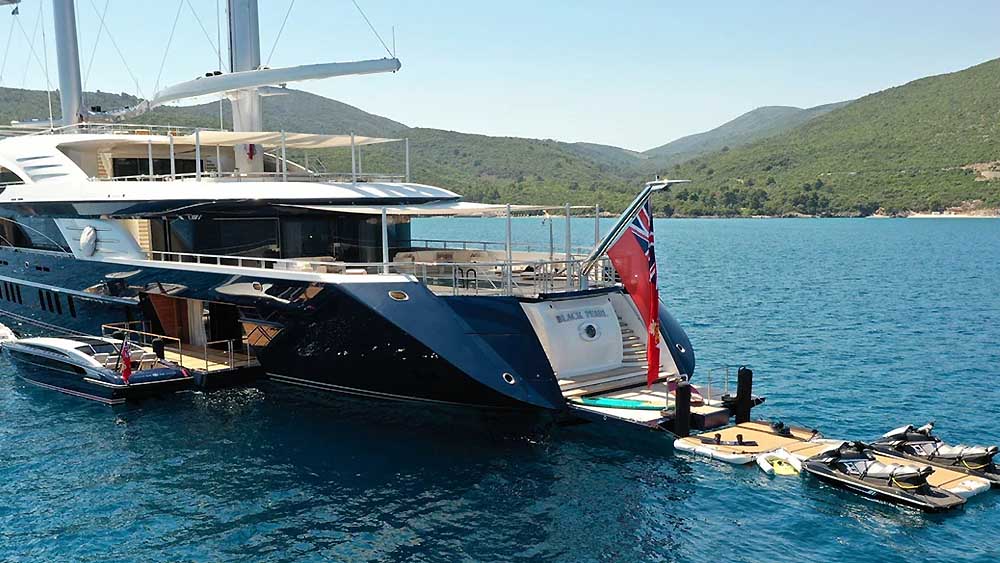
Black Pearl’s profile is dominated by three carbon DynaRig masts standing approximately 70 metres high. Unlike a conventional rig, the masts rotate and support rigid yards carrying square sails that are automatically controlled.
The system was developed by Dykstra Naval Architects, building in part on experience gained with Maltese Falcon. The sailplan is divided into relatively small individual sails to reduce loads, and these can be set or furled through automated systems.
The entire sail area, approximately 2,877 square metres according to Oceanco’s more recent documentation, can be deployed in around seven minutes.
Operations that on a yacht of this scale would normally require extremely complex crew work can therefore be managed through a centralised system.
Sailing while producing electricity
Perhaps Black Pearl’s most revolutionary feature remains hidden below the waterline.
Her hybrid propulsion system allows the propellers to operate in reverse while she is under sail. Instead of consuming energy to propel the yacht, rotation generated by the flow of water can drive the electric propulsion motors as generators and feed electricity back into the onboard network.
This is known as regeneration mode.
Oceanco describes Black Pearl as being designed to cross the Atlantic without burning fossil fuel, combining hydrodynamic efficiency, DynaRig, hybrid systems, energy regeneration and waste-heat recovery.
That does not mean a 106-metre yacht can operate indefinitely without conventional energy. Rather, it shows how technologies capable of dramatically reducing fuel consumption during a long passage were integrated into the project from the outset.
Eight different ways to use propulsion
The complexity of the system also becomes clear in the various ways propulsion can be managed.
Black Pearl can travel entirely under sail, use electric motors at low speed, combine diesel and electric propulsion, or use the electric motors as generators while travelling under wind power.
The system was developed to provide several operating configurations, from quieter manoeuvring to energy-saving modes and maximum propulsion output.
It is therefore not simply a matter of adding an electric component to a conventional propulsion system. Engines, sails and electrical generation were designed as parts of the same system.
The engine room follows the same philosophy. Rather than occupying two levels, as is common on yachts of this scale, it is contained on a single deck, releasing greater interior volume for guest spaces.
A bow designed to reduce resistance
The exterior lines are the result of work by Ken Freivokh Design and Nuvolari Lenard, while Dykstra Naval Architects contributed to the naval architecture and sailing system.
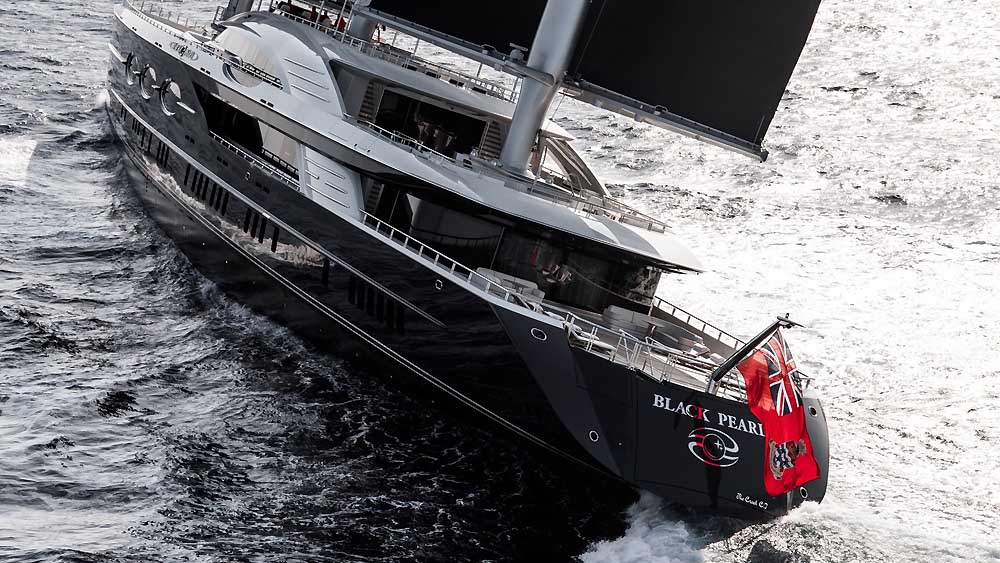
One of the most recognisable features is the bow. Nuvolari Lenard has explained that its flared shape helps achieve a particularly long waterline, contributing to performance while also diverting spray.
It is a good example of the project’s philosophy: an element that appears to be primarily aesthetic also has a functional purpose.
The hull is steel, the superstructure uses aluminium and the masts are constructed from carbon fibre.
30 knots powered by the wind
Performance makes the project even more unusual.
Oceanco states that Black Pearl can reach up to 30 knots under sail. It is a remarkable figure for a yacht more than one hundred metres long with a gross tonnage of approximately 2,864 GT.
The figure is significant not because Black Pearl was designed simply to chase speed records, but because it demonstrates what an efficient sailing system can achieve when applied at a scale normally associated with large motor yachts.
Wind therefore returns to centre stage, not through nostalgia for traditional sailing, but as a genuine technological component of the yacht.
A superyacht that changes period inside
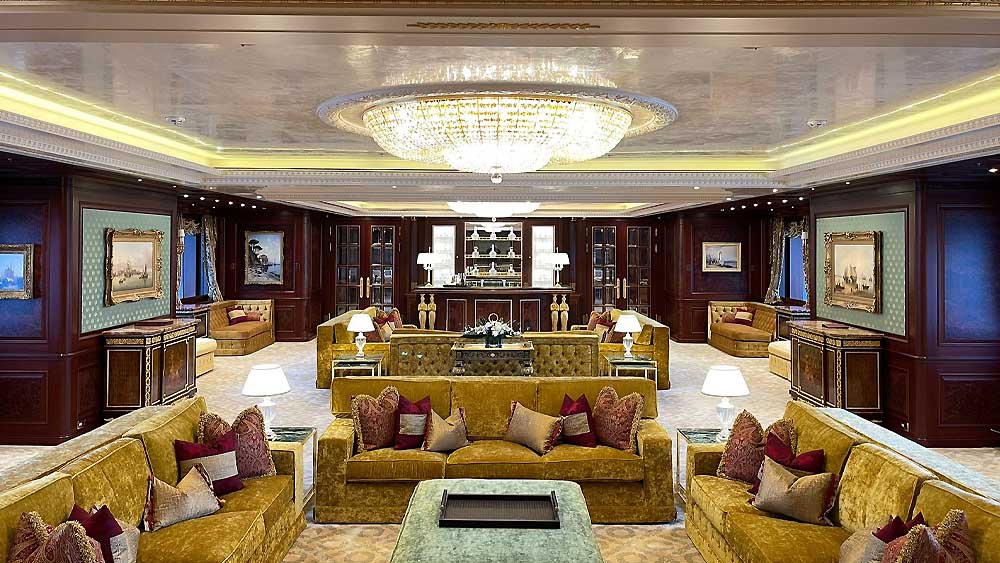
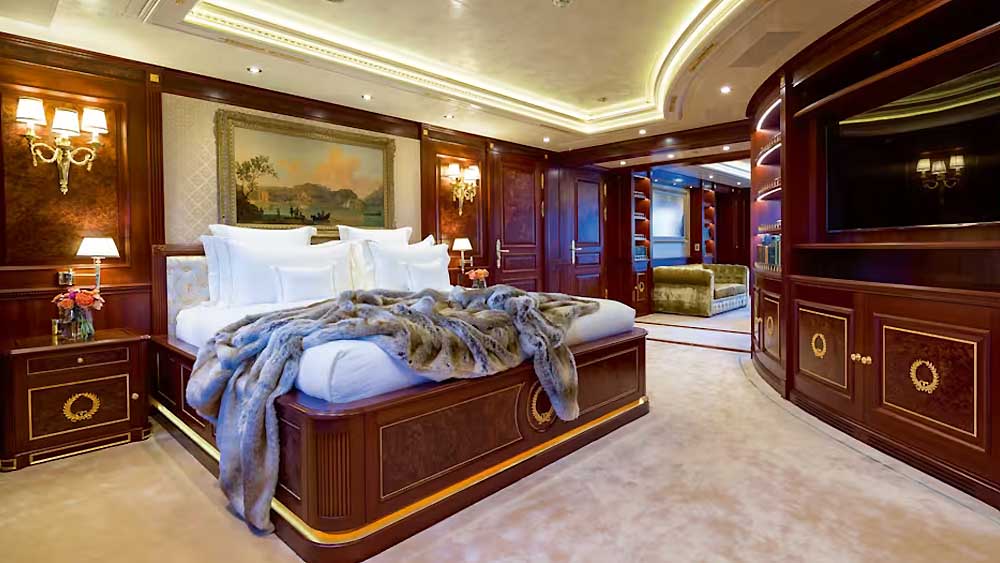
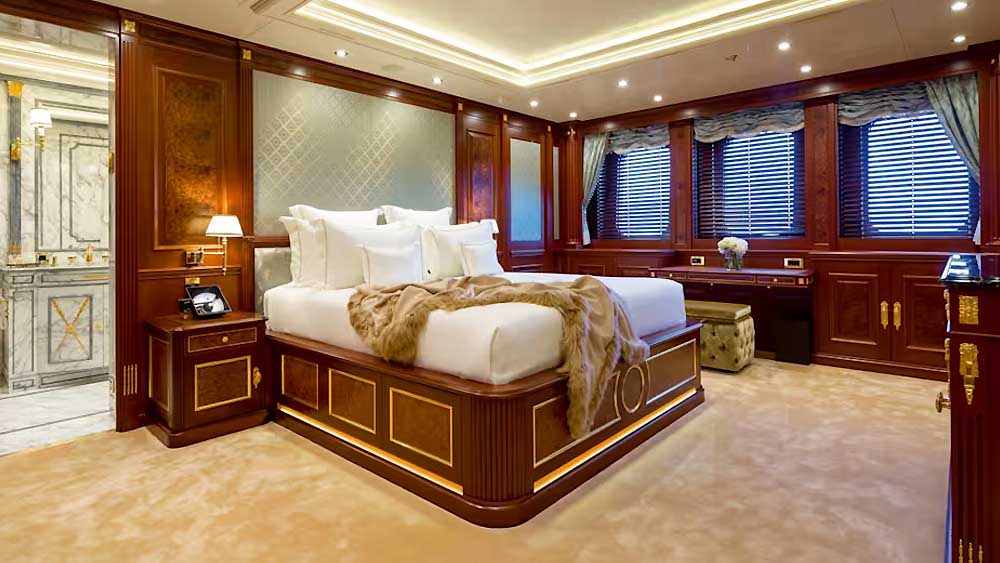
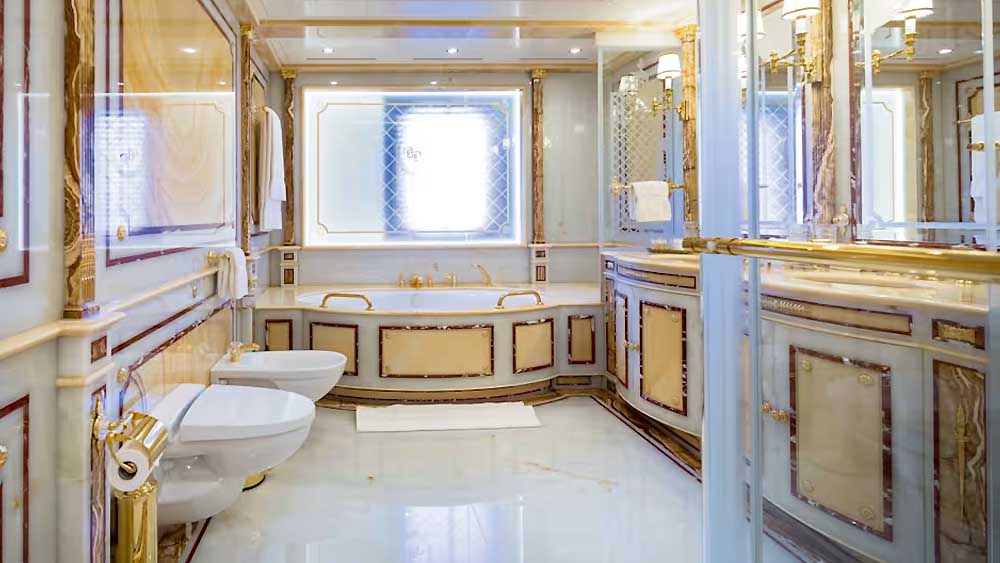
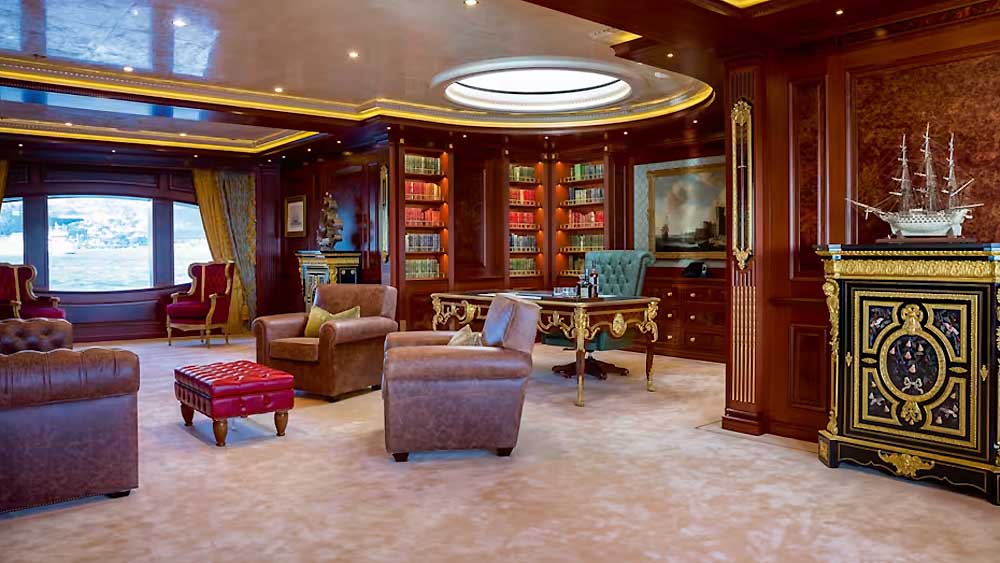
The yacht’s technological character is not excessively repeated throughout her interiors.
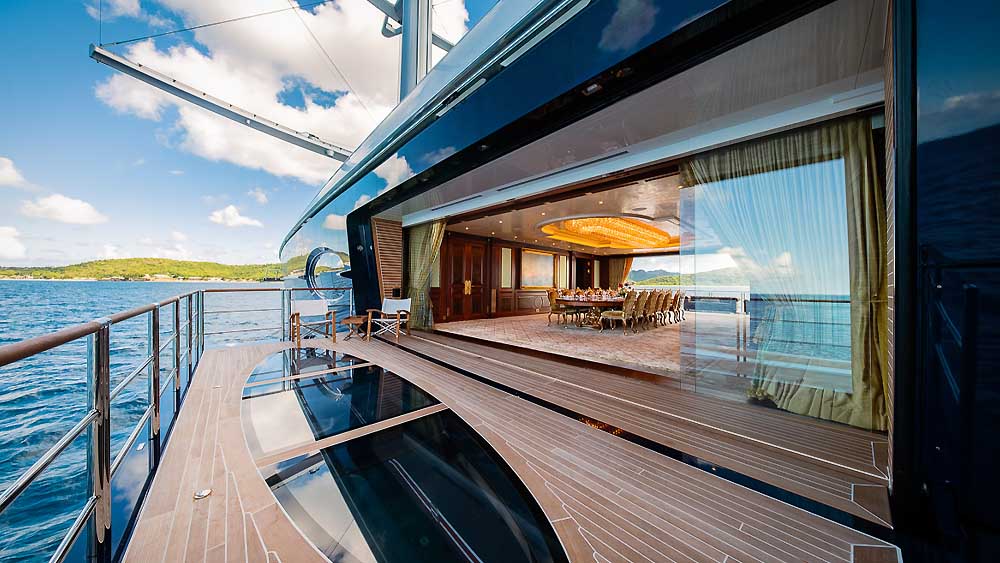
The interior project involved Nuvolari Lenard and Villate Design, with Ken Freivokh contributing during the yacht’s wider design development. The spaces also draw inspiration from large sailing yachts of the past, deliberately contrasting with the advanced technology concealed behind them.
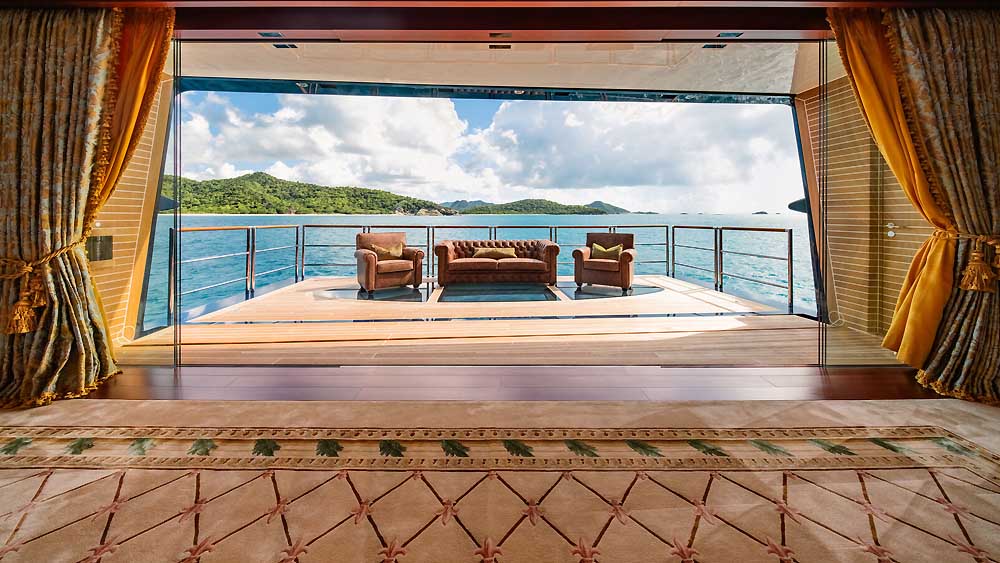
One of the most striking features is the multi-level atrium incorporating an all-glass elevator alongside the central mast.
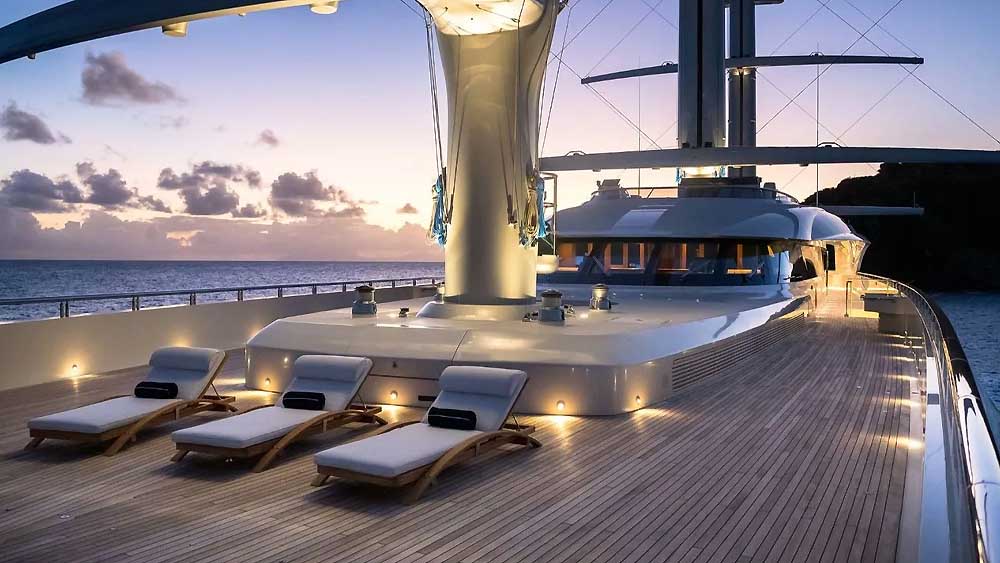
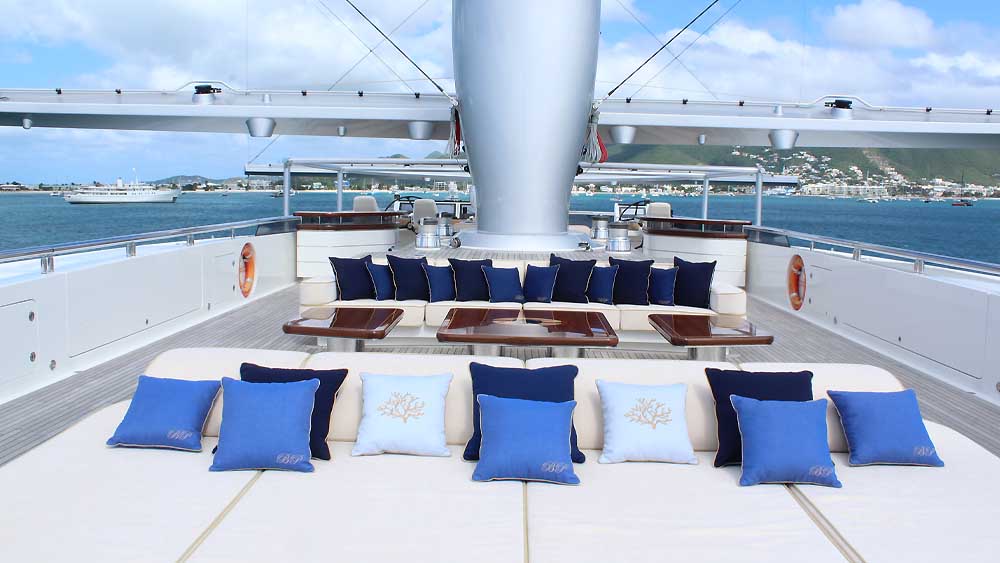
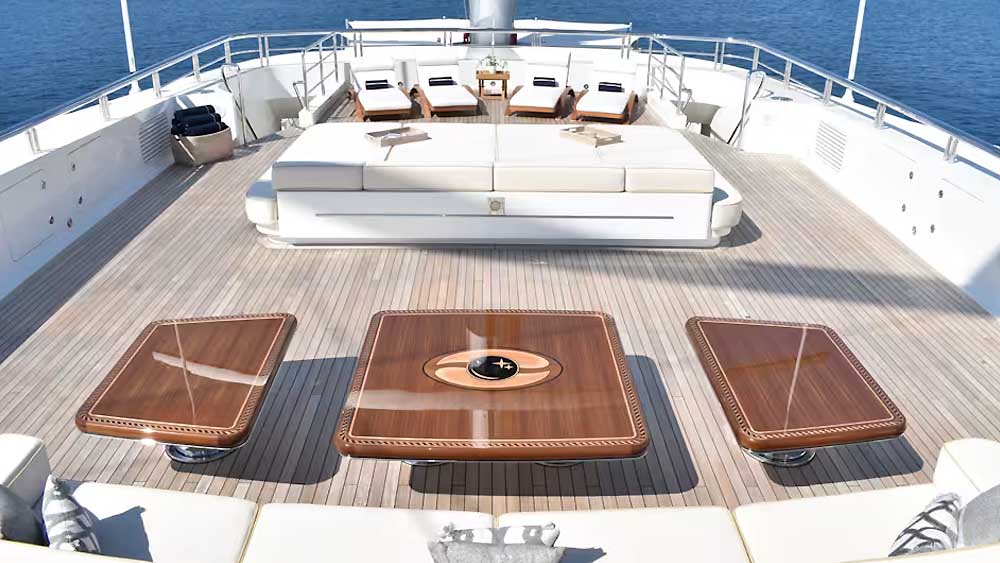
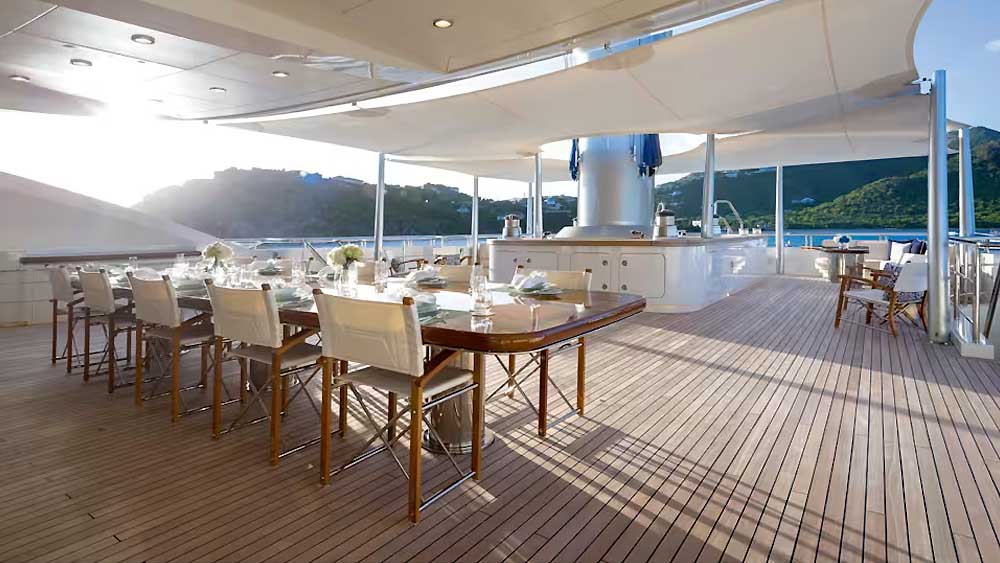
Black Pearl also features a swimming pool, spa pool and a beach club that can be converted into a cinema. The main outdoor pool is approximately 6.5 metres long and has a movable floor that allows its depth to be adjusted or raised flush with the deck.
These are features normally associated with large motor yachts, but here they are integrated into a platform conceived first and foremost as a sailing yacht.
A yacht built around a vision
Black Pearl was developed for Oleg Bourlakov, whom Oceanco remembers as the visionary behind the project. His interest in the ocean and reducing environmental impact led the team to explore technologies that were far from common in large-yacht construction at the time.
Her construction brought together a wide international group of specialists, including Oceanco, Dykstra Naval Architects, Ken Freivokh Design, Nuvolari Lenard, Villate Design and the engineers responsible for the hybrid systems.
Delivered in 2018, Black Pearl was therefore not the result of one revolutionary technology. Her significance comes from integrating many different solutions: DynaRig, hybrid propulsion, regeneration, waste-heat recovery, energy management and hydrodynamic optimisation.
When 106 metres become an experiment in the future
Years after her delivery, this is probably what continues to make Black Pearl relevant.
Not because she has solved the environmental impact of superyachting. A vessel of this scale still requires enormous quantities of materials, energy, infrastructure and maintenance.
Black Pearl does, however, demonstrate that even on a platform exceeding one hundred metres, the relationship between sailing, propulsion and energy can be reconsidered.
In this case, wind is not a romantic addition to a large yacht. It is part of the energy system.
And perhaps this is Black Pearl’s real modernity: taking one of the oldest forms of marine propulsion and combining it with contemporary technology to explore a different way of crossing the sea.
__
Oceanco
© MED Yachting Editorial Team
Black Pearl, when the wind becomes energy
__
The information in this article has been sourced from and adapted from official sources and/or press releases, in accordance with our editorial code of ethics.


subscribe free of charge to our WhatsApp channel : scan or click the QR code



MAGAZINE
YACHTS
LIFESTYLE
EVENTS
Partnership
Disclaimer and publishing
Privacy and Cookies (GDPR)
media@med-yachting.com

Euroblu International
MED digital publishing
Via Giosué Carducci, 10
00187 Roma IT
PI 14592991005
GoogleMap
© 2019, MED-YACHTING & LIFESTYLE MAGAZINE All rights reserved.