

- MEDITERRANEAN YACHTING MAGAZINE
Back to previous page Language Italian Spanish
Beneteau First 30, making the pleasure of planing simple again
Light, fast and available with two cockpit configurations, the new First 30 seeks a balance between cruising and the pleasure of performance sailing
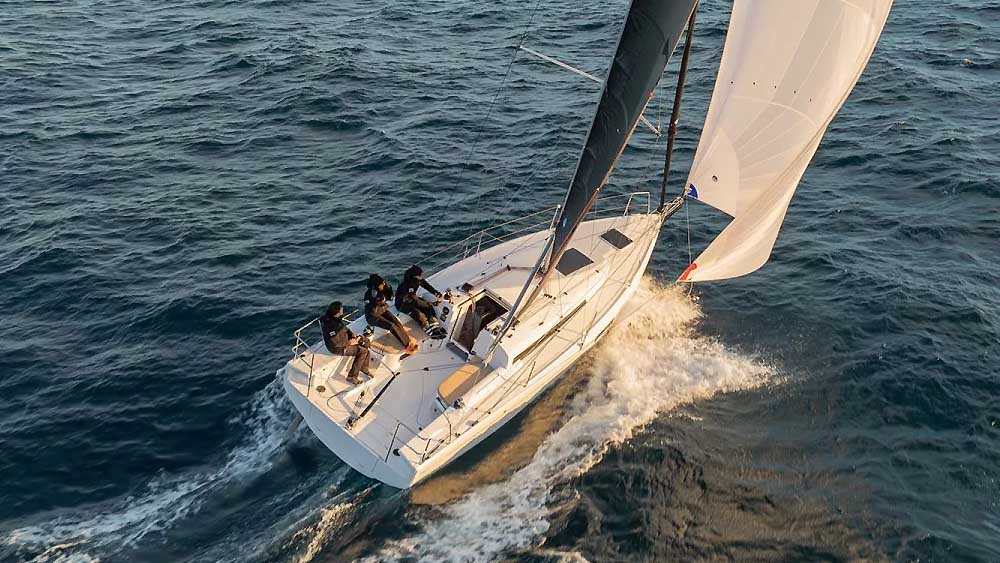
The Beneteau First 30 brings planing performance to a 9.35-metre sailboat designed to combine speed, easy handling and genuine cruising comfort
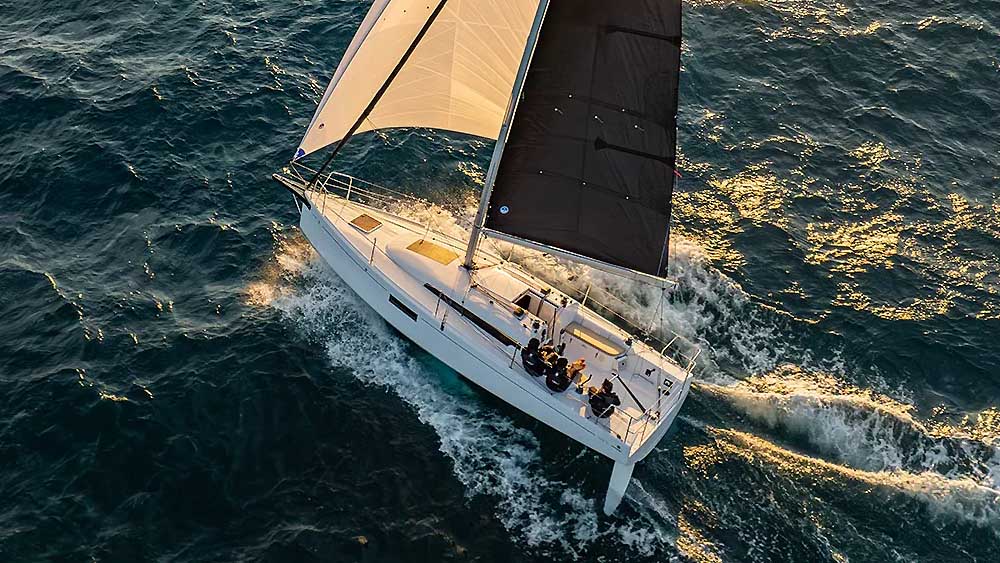
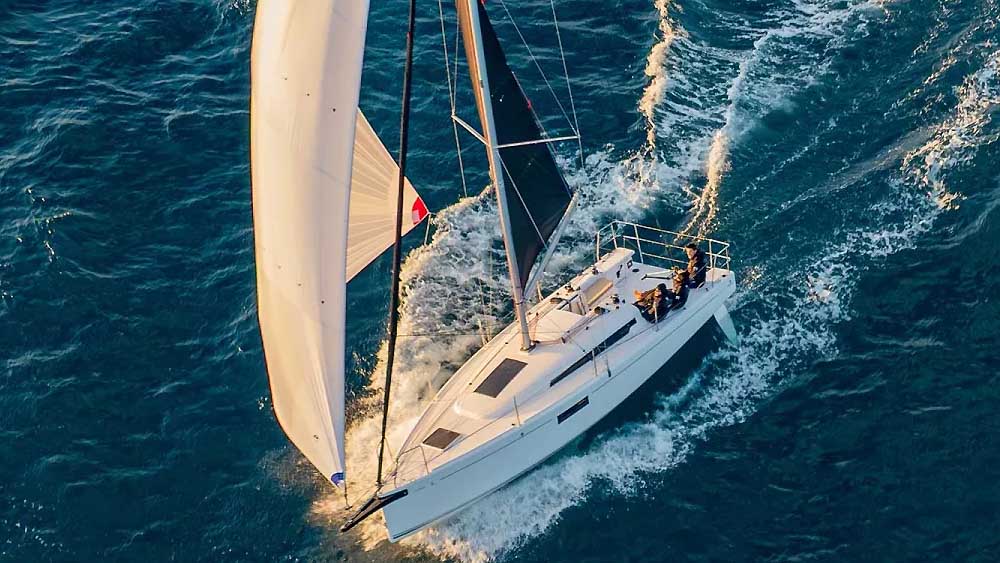
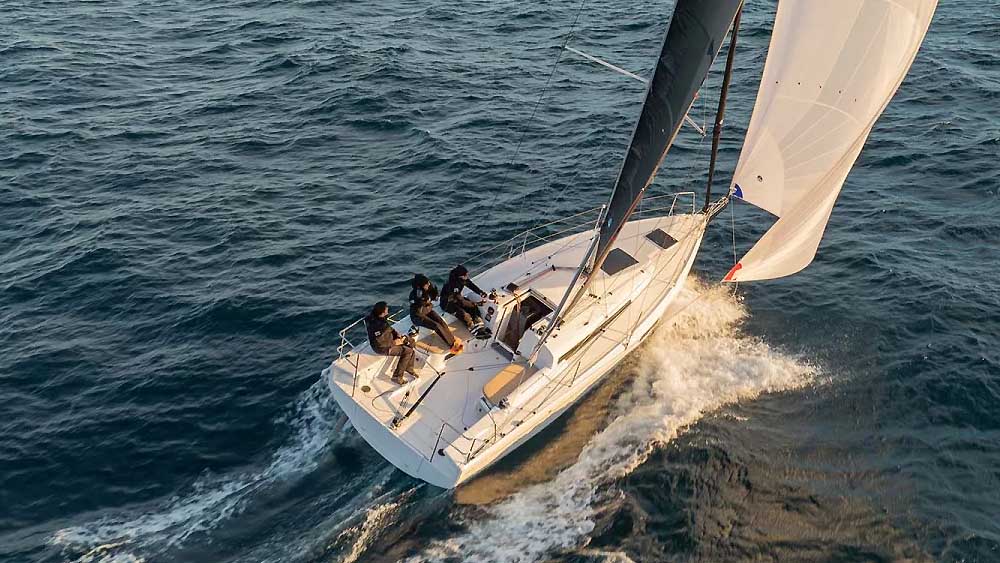
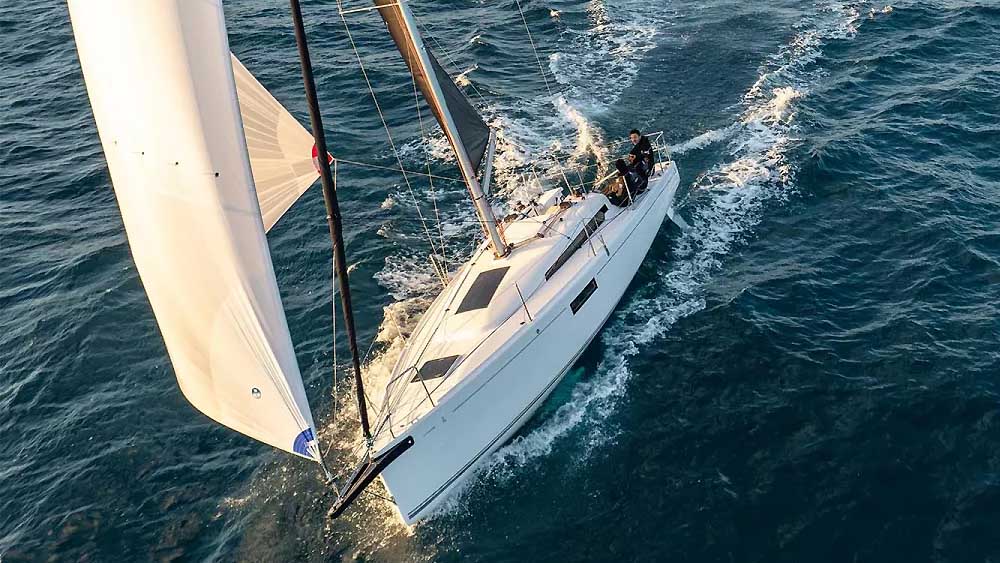
The Beneteau First 30 weighs just over three tonnes, measures 9.35 metres and has been created around a precise idea: making it easier to experience that special moment when a sailing yacht accelerates beyond its usual displacement behaviour and begins to plane.
Beneteau describes the concept as a planing cruiser. It is an interesting definition because it combines two ideas that do not always coexist easily: a fast and engaging yacht to sail, and a compact cruiser with cabins, galley, bathroom and everything required to spend several days on board.
It is therefore neither a racing yacht with a few comforts added nor a conventional cruiser occasionally expected to sail faster. The objective is to let both personalities coexist.
When speed becomes enjoyment
Naval architecture is by Samuel Manuard, with design by Lorenzo Argento. Pure Design & Engineering handled structural engineering, SITO developed the interiors, while research and innovation involved Beneteau together with Seascape.
The starting point is a modern, relatively light hull designed to accelerate and reach planing conditions more readily when wind and sea allow.
Yet speed is not separated from control. The twin rudders contribute to maintaining handling and stability as the yacht accelerates or heels further.
This is perhaps where the First 30 finds its identity: not by making sailing more extreme, but by allowing more sailors to experience one of its most enjoyable dimensions.
Two cockpits for two ways of sailing
Another interesting decision concerns the cockpit. Beneteau offers two different configurations, one more focused on cruising and day sailing and another for owners who also want to race.
In the cruising version, the mainsail bridle and German mainsheet system leave the cockpit floor almost completely clear. Controls remain within easy reach, while the central area becomes more comfortable when the yacht is at rest.
The racing configuration introduces a mainsheet traveller and a more precise adjustment system, creating a dedicated working area for the crew.
The yacht therefore changes not only in equipment, but also in the way its outdoor space is used.
9.35 metres that become a small home on the water
Below deck, the First 30 reveals another side of its character.
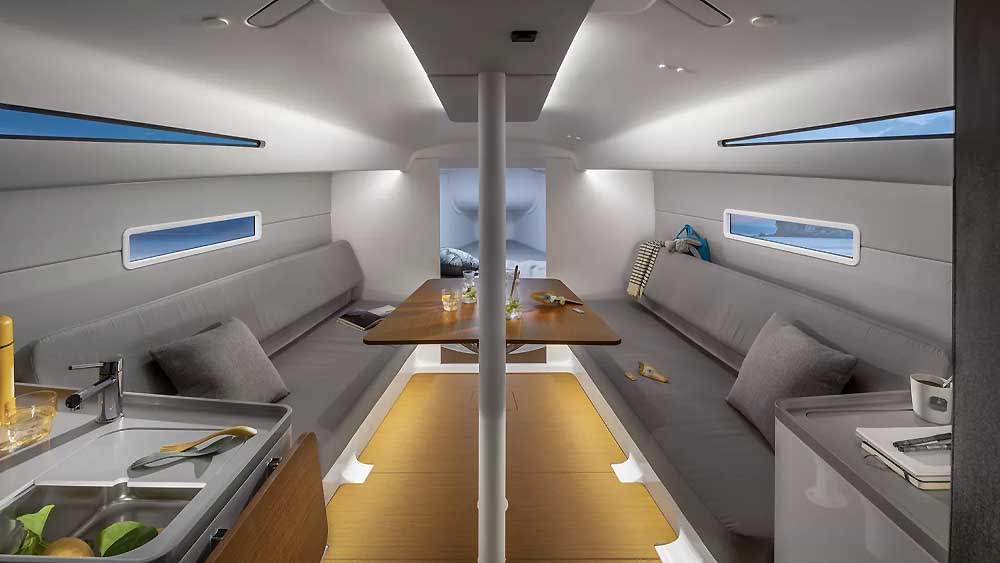
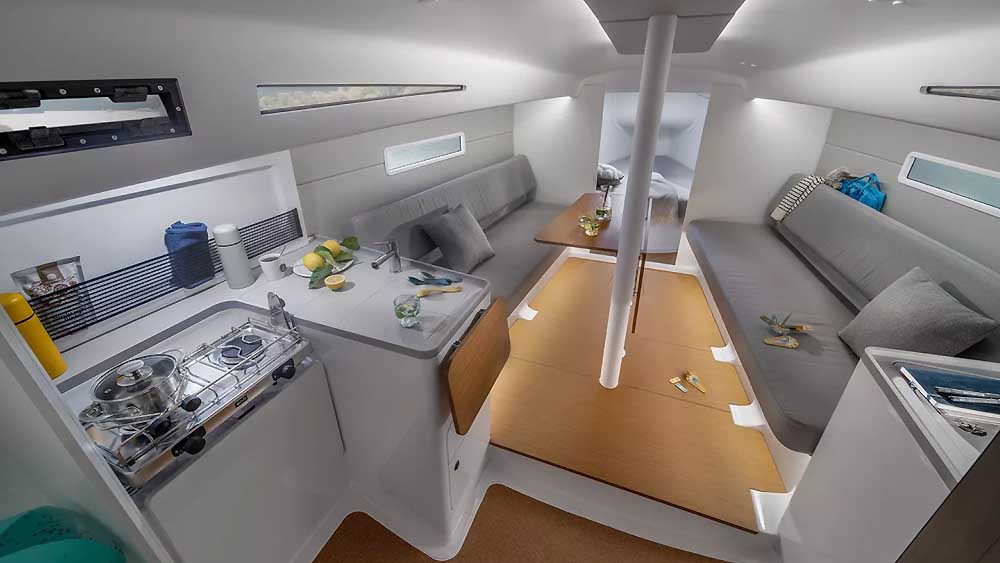
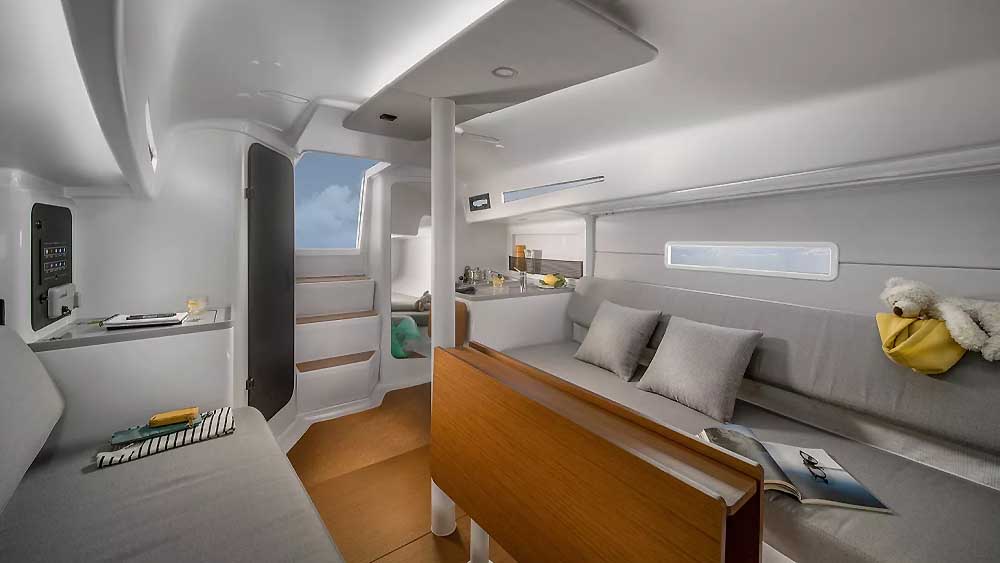
The interiors are deliberately simple but provide accommodation for four people in two cabins. The forward cabin is generous for a yacht of this length, while the dinette can provide additional sleeping space.
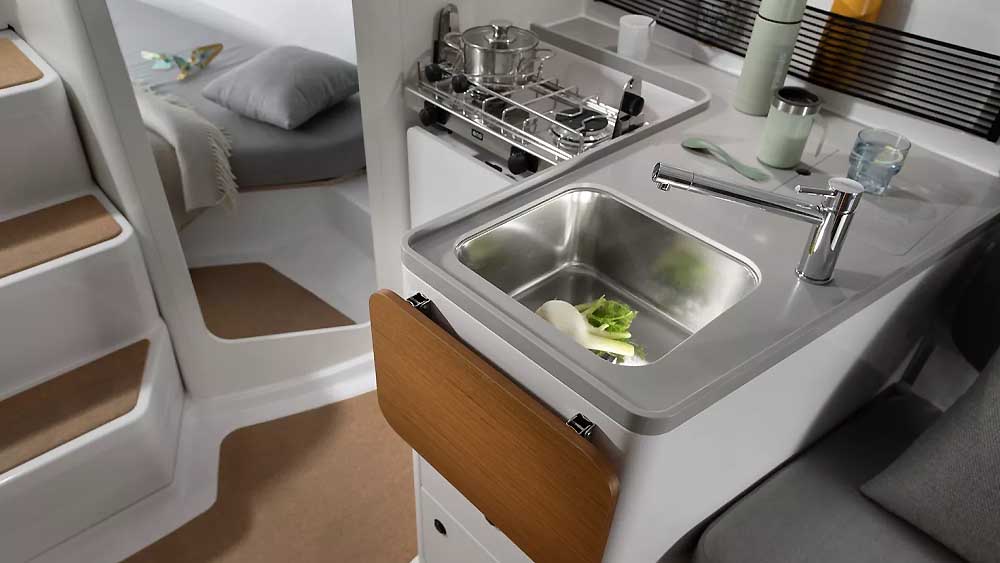
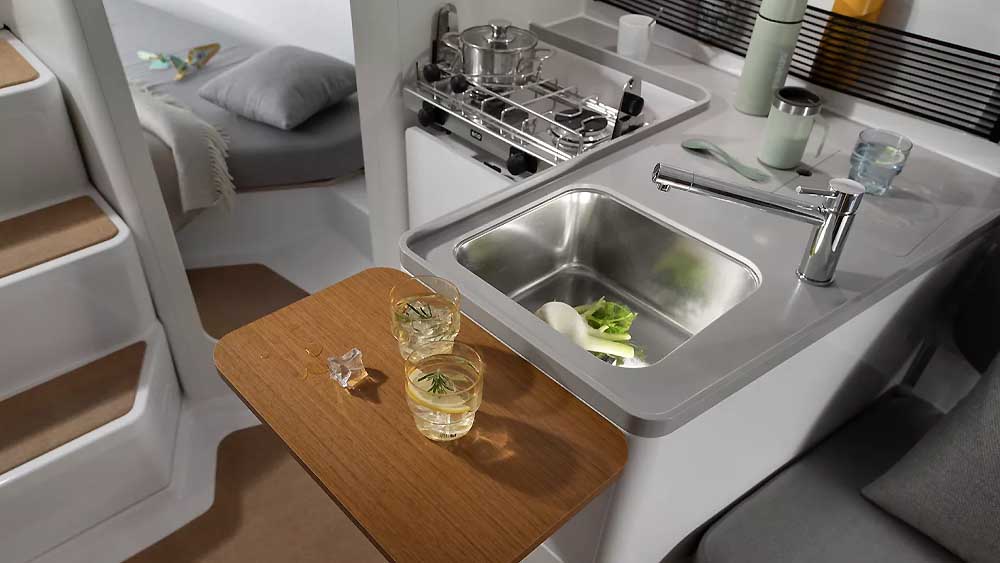
The galley includes a gimballed gas cooker and can be equipped with an optional refrigerator. Interior headroom reaches 1.85 metres, and there is also a separate bathroom with a marine toilet.
Other lightweight and practical solutions include magnetic folding doors, removable textile wardrobes and a folding galley extension.
They all follow the same philosophy: avoiding unnecessary weight and complexity without giving up what is genuinely useful when cruising.
A yacht that does not rely on physical strength
One aspect Beneteau emphasises is ease of use.
The deck layout, running rigging and generously sized winches have been designed to reduce the physical effort required to sail the boat. This matters because performance yachts are often automatically associated with experienced, numerous and physically strong crews.
The First 30 aims to reduce that barrier.
The objective is not to remove the skills required to sail well, but to create a yacht where performance does not automatically mean greater difficulty.
This makes the concept relevant both to experienced sailors looking for something more immediate and to those beginning to explore performance sailing.
Small, but designed with open water in mind
The First 30 measures 9.35 metres overall with a beam of 2.99 metres and a declared light displacement of 3,040 kg.
Two draught options are available: 1.68 metres and 1.98 metres. Fuel capacity is 40 litres, fresh water capacity is 100 litres and maximum auxiliary engine power is 14 hp.
More significant, however, is its CE A2/B6 certification. For a thirty-foot yacht, this confirms that the design is not limited to sheltered coastal sailing or short day trips.
Its dimensions and capacities naturally require different considerations from those of larger yachts, but the underlying design ambition extends beyond simple day sailing.
A name dating back to 1977
First 30 is not a new name for Beneteau.
The shipyard directly references the 1977 First 30, a model that helped establish the reputation of the First range and the combination of cruising and performance that would remain central to the family.
The new yacht does not attempt to reproduce its predecessor’s shapes or solutions.
Almost fifty years later, it interprets the same philosophy through modern hull design, lower weight, twin rudders, updated ergonomics and a different approach to interior living.
The heritage therefore survives through the name and underlying idea rather than through nostalgia.
Perhaps sailing needs boats like this
The First 30 arrives at a time when much of yachting continues to grow in dimensions, equipment and complexity.
This project moves almost in the opposite direction.
A relatively compact yacht, essential interiors, a small crew and a hull designed above all to remind people that sailing can simply be great fun.
The Mediterranean, with relatively short distances between ports, anchorages and islands, feels like a natural environment for this philosophy. A week of cruising can coexist with an afternoon of fast sailing and, with the right configuration, even a race.
Perhaps that is the most interesting aspect of the First 30: it does not require its owner to decide in advance what kind of sailor to be every time they step aboard.
__
Beneteau
© MED Yachting Editorial Team
Beneteau First 30, making the pleasure of planing simple again
__
The information in this article has been sourced from and adapted from official sources and/or press releases, in accordance with our editorial code of ethics.



subscribe free of charge to our WhatsApp channel : scan or click the QR code



MAGAZINE
YACHTS
LIFESTYLE
EVENTS
Partnership
Disclaimer and publishing
Privacy and Cookies (GDPR)
media@med-yachting.com

Euroblu International
MED digital publishing
Via Giosué Carducci, 10
00187 Roma IT
PI 14592991005
GoogleMap
© 2019, MED-YACHTING & LIFESTYLE MAGAZINE All rights reserved.